New Testament

Monday: The Importance of Assertions

It is entirely appropriate that a book dealing with the subject of Christian assurance should end with three final affirmations, introduced by the repetitive phrase “we know” in verses 18, 19 and 20. In some ways these statements are a summary of much of what John has been teaching. In another sense they are a reminder of how important affirmations are to Christianity.
Keep Reading

Tuesday: The First Affirmation

John’s first affirmation is that the one who is truly born of God does not sin. At first glance this statement seems to be contradictory to John’s repeated declaration in chapter one that anyone who says that he does not sin or has never sinned is either self-deceived or a liar, just as the section in chapter 3, verses 4-10, seemed to be contradictory to those same statements. But the contradiction is only an apparent one, and our discussion of the earlier passage indicates how we should deal with this.

Keep Reading

Wednesday: The Second Affirmation

The second of John’s affirmations is that “we are of God,” joining himself to his readers in this certainty. But where does the certainty come from? In the first instance the certainty that the one born of God does not sin comes from the ability of Jesus (or God) to keep the Christian. In this case the certainty that “we are of God” comes from the fact that the tests of righteousness, love, and sound doctrine have been applied and the results discovered to be positive.

Keep Reading

Thursday: The Third Affirmation

This leads to the third of John’s affirmations, which is, as Stott says, “the most fundamental of the three.” This strikes at the very root of the heretical Gnostic theology, for it is the affirmation that the Son of God, even Jesus, has come into this world to give us both knowledge of God and salvation.

Keep Reading

Friday: Keep Away from Idols

Once we know Him, what then? Then we must keep ourselves from idols. In verse 18 John has written that the Son of God will keep the Christian, but this does not relieve the Christian from his own responsibility to persevere in God’s service. Rather than drifting, he must draw near to God and grow in the knowledge of Him. For only then will he be truly kept from idols.

Keep Reading

Monday: The Immediate Problem

The letters of 2 and 3 John are the shortest books of the New Testament, shorter even than Jude or Philemon which also each have only one chapter. But this does not mean that either 2 or 3 John is insignificant. To be sure, in some ways each merely repeats the general message of 1 John, which is longer. But the repetitions are made in two distinct contexts which in turn give a unique direction to the letters and call forth new emphases.

Keep Reading

Tuesday: The Elder

One similarity between the two letters is that each begins by the author’s introduction of himself as “the elder.” In the one case he writes, “The elder unto the elect lady and her children, whom I love in the truth” (2 John 1). In the other letter he writes, “The elder unto the well-beloved Gaius, whom I love in the truth” (3 John 1). Traditionally the identification of “the elder” plus the unnamed author of 1 John and of the fourth Gospel has been fixed as John, the son of Zebedee, who became an apostle. The captions of the books themselves indicate this.

Keep Reading

Wednesday: John the Apostle

At the conclusion of yesterday’s devotional, we mentioned one reason why Eusebius’ reference to Papias may not prove the existence of two Johns. Today, we begin by offering another reason.

Keep Reading

Thursday: The Other Books

In yesterday’s study, we concluded with John Stott’s insightful question: “Is it possible, that a man of such prominence, who exercised such authority and wrote three Epistles which are included in the New Testament canon, should have left no more trace of himself in history than one dubious reference by Papias?”

We may wish to answer that such may indeed be possible, as an outside though highly unlikely chance. But it is not probable. Consequently, we rest on sound ground when we perceive the importance and widespread authority of the author to be that of none other than John, the son of Zebedee…

Keep Reading

Friday: The Message for Today

The messages of 2 and 3 John are not just for an earlier age, despite the unique and particular problems to which the letters are addressed. Like all Scripture they have a message for our own time also.

Keep Reading

Monday: The Recipient of John’s Letter

No other books of the New Testament more clearly reflect the current letter writing style of the first century than do 2 and 3 John. There is an opening greeting, in which the author identifies himself and names those to whom he is writing. There is an opening salutation. This is followed by the body of the letter, containing the message. Then there is a closing salutation in which the author expresses his hopes of seeing the one to whom he is writing and sends a final greeting. The letters of 2 and 3 John follow this format. But, like the other New Testament books which also follow it, particularly the Epistles of Paul, these books introduce distinctly Christian ideas by which the conventional forms are both elevated and transformed.

Keep Reading

Tuesday: The Life Within

The unique feature of this opening salutation is John’s surprising emphasis upon truth and his linking of the truth he thus emphasizes to love. Indeed, the word “truth” occurs four times in the first three verses and one more time in verse four.

Keep Reading

Wednesday: Our Need for Growth

There is much in the life of the local church to give John cause for rejoicing, but this does not mean that there is no more room for growth. These to whom he writes are Christians. Their lives meet the three tests: the moral test (which is righteousness or obedience to God’s commands), the social test (which is love), and the doctrinal test (which is the test of truth or sound doctrine). But this does not mean that their lives are as marked by righteousness as they might be, that they love each other fully, or that they have totally assimilated the whole of Christian doctrine.

Keep Reading

Thursday: The Danger Without

There is a true progress in the Christian life, but it is progress based upon a deeper knowledge of the historical, biblical Christ. Progress on any other ground may be called progress, but it is a progress that leaves God behind and is, therefore, not progress at all.

Keep Reading

Friday: John’s Plan to Visit

The second part of John’s instructions to the local church reveals how strongly he feels about the danger. For here the Christians are not only warned. They are also instructed to have no part in encouraging either the false teachers or their false doctrines. In fact, says John, do not even greet them, for in so doing you may be sharing in their wicked work.

Keep Reading

Monday: A Fellow Worker

The messages to or about these three personalities give a straightforward outline to the book. There is: 1) the message of Gaius, who is termed a fellow worker; 2) the message about Diotrephes, who is causing the problem; and 3) the message about Demetrius, who is designated as an example to all.

Keep Reading

Tuesday: Supporting Christian Workers

Today many regard truth as nonessential, so long as good deeds are done. But John does not favor this view, nor does he regard it as possible. According to the apostle, good deeds flow from truth, just as love flows from it. For it is only as one walks according to the doctrines of the Word, which he has been taught, that truly righteous acts become possible.

Keep Reading

Wednesday: A Major Problem

Here is a great word for those who would like to be engaged in front-line Christian work but who cannot, due to ill health, circumstances, or other pressing obligations. In God’s sight those are fellow workers who merely support others by their gifts, interest and prayers.

Keep Reading

Thursday: John’s Approach

We may grant that there was a struggle for power over the affairs of the local church. But John attributes this, not to a mere difference of opinion about who should have the final word, but to obvious sin; for John argues that the struggle came about because Diotrephes loved “to have the preeminence.”

Keep Reading

Friday: A Fine Example

In verse 11 we have what seems to be a general exhortation to do good and not evil. But in the context of the letter the evil example is most obviously Diotrephes, and the good example, Demetrius. Consequently, the exhortation leads directly into what follows. The personal nature of the maxim is conveyed by the word “imitate.”

Keep Reading
Who Has the Victory

Monday: A Pyrrhic Victory

Do you remember where that expression “Pyrrhic victory” comes from? It comes from a battle that took place between the Greek armies directed by General Pyrrhus and the Roman armies in the year 279 B.C. The Greek armies were in southern Italy, and they were engaged in a massive conflict with the Roman forces. The armies under Pyrrhus lost thousands of men, even though they won the battle, and Pyrrhus lost some of his most able commanders. And he lost all of his supplies and baggage. After the battle, one of the Greeks came up to him and congratulated him on his victory. Pyrrhus replied, “Another such victory and we are ruined.” And so a Pyrrhic victory came to refer to a victory which is a genuine victory, according to some standards, but which is won at a devastating and destructive price. Now that’s what we’re talking about when we’re talking about the death of Jesus Christ.

Keep Reading
Who Has the Victory

Tuesday: Satan’s Work Against Jesus

However, it wasn’t only the enemies of Christ that seemed to have won on that Good Friday. It was also a victory for the devil, or so it seemed. The devil had begun his onslaught against Jesus even before the religious leaders. Even before the leaders knew He was around to cause them trouble, the devil knew He was there.

Keep Reading
Who Has the Victory

Wednesday: The Defeat of Death

Jesus is the One who described Himself in John 14:6 as the way, the truth, and the life. Jesus said, “No one takes my life from me. I have authority to lay it down, and I have authority to take it up again.” But when Jesus stood alone before this formidable foe, it seemed by any reasonable analysis, any objective appraisal, that it wasn’t Jesus who was victorious, it was death.

Keep Reading
Who Has the Victory

Thursday: Our Own Resurrection

Yesterday, we concluded by making the point that Jesus’ resurrection is proof that God the Father accepted Christ’s sacrifice for our sins on the cross. And not only that, the resurrection is also a victory because it shows that the ravages of sin will be reversed—those ravages of sin which affect us in our bodies and eventually bring about our physical death.

Keep Reading
Who Has the Victory

Friday: Victory for All Who Will Come

Because Jesus has removed death’s sting by His death in our place, although physical death comes, for believers what follows is the receiving of our resurrection bodies. This is necessary because, as Paul himself says, flesh and blood can’t inherit the kingdom of God. You have to have a resurrection body. We have to lay aside this body in order that we might take on a new body in order to be able to be presented in heaven.

Keep Reading
Door to Paradise

Monday: Two Biblical Utopias

When you talk about Utopias biblically, you find that there are two. There is a Utopia in the early pages of the Word of God, the Garden of Eden, and there is a Utopia at the end in the book of Revelation. The one at the beginning we have lost and can never go back to; the one in Revelation is before us, which we can enter, but the way in which we are to enter is by the cross and the resurrection of the Lord Jesus Christ.

Keep Reading
Door to Paradise

Tuesday: Perfect Work and a Perfect Companion

God gave Adam a paradise in which he had useful, meaningful work to do. God could have done without Adam of course. He did not need Adam to bring the universe into existence, nor did God need Adam to do anything once God’s work of creation had been completed. But when God created Adam He understood that part of Adam’s wellbeing had to do with significant work.

Keep Reading
Door to Paradise

Wednesday: From the First Paradise to the Second

So now we have this paradise, a perfect place, with a perfect man, being given perfect work to do, and with a perfect companion. And yet, as we know, through the temptation of Satan in the form of the serpent, Adam turned his back on that paradise because he turned his back on God and he sinned.

Keep Reading
Door to Paradise

Thursday: The New and Holy City

And so we come here to Revelation 21and see the presence of God again with His people. It’s a glorious scene. We then see something else. We see described the bride of the Lamb, that is, the bride of Christ. This bride is a holy bride, a bride without blemish, without stain, a bride who has been made perfect through the work of Jesus Christ, perfectly adorned for her husband. This bride is the Church, the communion of the saints.

Keep Reading
Door to Paradise

Friday: Regaining Paradise

Our Lord was raised from the dead and because He was raised, those who are united to Him in saving faith will be raised also. You know how the apostle Paul talks about it in 1 Corinthians 15, that great chapter on the resurrection. He says that “flesh and blood cannot inherit the kingdom of God, nor does the perishable inherit the imperishable” (v. 50). But at the last trumpet, all those mortals who are united to Christ by faith will put on immortality, and what is perishable will put on the imperishable.

Keep Reading

Monday:  The Most Important Birthday of All

Birthdays are usually very happy times. For that reason we generally try to remember the birthdays of close friends. We who have children cannot forget birthdays; the children will remind us. When we get older we are supposed to be too sophisticated to remind people that our birthday is coming, but we are always pleased when they remember. Of all the birthdays that are remembered there is no birthday that has been remembered more faithfully by more people over a longer period of time than the birthday of Jesus Christ.

Keep Reading

Wednesday: No Room in the Inn

Another related paradox comes in at this point: When Joseph and Mary came to Bethlehem, there was no place for them to stay. As a matter of fact, there was no room even in the inn. When Luke says there was no room in the inn we have to understand him to mean there was no room for them anywhere. If there had been a place, they would have gone there. When they could not even get into the inn, they ended up in the stable, and that is almost to say there was no place for them at all.

Keep Reading

Thursday: Angels and Shepherds

Is there room in your heart for Jesus? If Jesus is God’s great gift to humanity, you could never have anything greater in your life than Jesus. The source of all blessing begins with receiving Him. But notice! If you do have room in your heart for Jesus, then the world is not going to have room for you.

Keep Reading

Friday: How to Celebrate Christmas

The Christmas story is a great story. It is filled with paradoxes, but the paradoxes all come down to this: God has entered human life at a low level so that nobody, no matter how low or how sinful, how high or self-righteous, need be excluded. Jesus Christ is for you, whoever you are. He is the Son of God. He is the Savior. He invites you to receive Him into your heart. Won’t you do that? This is the time. It would be a pity to go through another Christmas and not receive Him.

Keep Reading
Heart of the Bible

Monday: Three Views of the Human Condition

Somewhere in my library I have a pamphlet by Donald Grey Barnhouse entitled How to Mark Your Bible. This pamphlet contains suggestions for using Bible markings as an aid to Bible study, and it contains sample pages from a Bible Barnhouse used and marked thoroughly. I think of this now because at Romans 3:21 and following, Barnhouse had written the picture of a heart in the margin of his Bible. That was to remind him, as he came to this passage, that Romans 3:21-27 is the heart of the Word of God.

Keep Reading
Heart of the Bible

Tuesday: Man’s Ruin in Sin: The Moral Dimension

Verses 10 and 11 capsulize Paul’s whole theology on this subject when he writes, “There is no one righteous, not even one; there is no one who understands, no one who seeks God.” When Paul says there is no one righteous, he is talking about the moral dimensions of our being. When he says there is no one who understands, he is talking about the intellectual dimension of our being. When he says there is no one who seeks God, he is talking about the volitional dimension of our being. Together these mean that things are so desperate that our state is actually hopeless unless God intervenes to do what needs to be done.

Keep Reading
Heart of the Bible

Wednesday: Man’s Ruin in Sin: The Intellectual and Volitional Dimensions

We need to see how desperate our situation is, because it is only when we see this that we can begin to appreciate the magnitude of the grace of God. So long as we think that at the worst we only have a few flaws, we believe that insofar as salvation is concerned all we need is for God to make up the deficit, plug the hole in the dike, or rub off the rough edges. But that is not the situation.

Keep Reading
Heart of the Bible

Thursday: God’s Remedy in Christ

In Christ, God has turned aside His own wrath, punishing sin in the person of His Son who died for sinners. We deserve to die. The wages of sin is death, and we have sinned. Nevertheless, God sent Jesus to bear the punishment of death in our place. He experienced the wrath of God for us.

Keep Reading
Heart of the Bible

Friday: By Faith Alone

Yesterday we looked at propitiation and justification. The third term is redemption. It is a business term. It has to do with buying something back. In the ancient world much of the commerce had to do with the purchase and selling of slaves, and this term relates particularly to slavery. It meant to buy a slave out of slavery and set the slave free. It is what Jesus has done for us.

Keep Reading
If God be for Us

Monday: No Condemnation

When I was talking about the third chapter of Romans, I pointed out that Romans 3 is the heart of the Bible. If that is true, Romans 8 is the Bible’s climax. It is a climax because it takes us from the matter of our deliverance from the penalty and power of sin to that final glorious consummation of our salvation when we are made free from sin in all respects and are brought into the presence of the Lord Jesus Christ and God the Father forever.

Keep Reading
If God be for Us

Tuesday: Justice versus Love

You recall what is said in the third chapter of John’s gospel, the very chapter which contains that great verse beloved by Christians everywhere, beginning, “For God so loved the world . . .” The chapter talks about the Gospel: that God sent Jesus Christ that we might have eternal life. But immediately after that it also talks about condemnation, saying that if we have not believed in Jesus we are condemned already because of our unbelief. In other words, our natural state is not neutral.

Keep Reading
If God be for Us

Wednesday: No Defeat

Just as Adam, Moses, David, and all the Old Testament figures were saved, though they were sinners, so did Christ save the woman, knowing that the time was coming when He would die upon the cross to pay the just punishment, not only for her sin, but for all whom the Holy Spirit should draw to faith in Him, ourselves included.

Keep Reading
If God be for Us

Thursday: No Separation

Third, in verses 26 and 27, Paul talks about our weakness. “The Holy Spirit helps us in our weakness,” he says. He acknowledges that we have it. We have a sinful nature within. We face hostile circumstances without. We are weak. How can we triumph? How do we know that these things are not going to gang up on us, and in the end, regardless of the value of the death of Christ, overcome us and defeat us?

Keep Reading
If God be for Us

Friday: Looking to God

The second reason why there will be no separation from the love of God is the impotence of everything, when set over against the sovereign love of God toward us in Christ Jesus. What are things, when set over against God? Paul talks about a number of things that might tend to separate us from that love.

Keep Reading
Three Miracles of Christmas

Monday: Christmas Miracles

There is something about Christmas that is wonderful—in spite of the frantic pace of the days leading up to Christmas, the anxious flurry of pre-Christmas buying and the undisguised commercialism and materialism that is so much a part of Christmas in the West. I suppose it is the sheer magnitude of the event itself, the grandeur of what Christmas means: the birth of the Savior.

Keep Reading
Three Miracles of Christmas

Tuesday: That God Should Become Man

The announcement that Jesus should be born to Mary has several parts, all of them important: that Jesus would be “great”; that He would be “the Son of the Most High”; that He would be “holy,” that is, without sin; and that He would “reign over the house of Jacob” on the throne of David forever. But of these various parts of the announcement the greatest, without any doubt, is that the one to be born should be the Son of God. It is the greatest part of the announcement because it means that by the incarnation and birth God would Himself become man.

Keep Reading
Three Miracles of Christmas

Wednesday: The Virgin Birth

The second miracle of Christmas announced to Mary by the angel Gabriel is the Virgin Birth. Strangely, this miracle was not a problem for the ancients. At least no strong opposition to its being possible has been recorded. It is only in recent times, in the earlier decades of this century, that the Virgin Birth has been discounted. It was attacked by the unbelieving liberal element in Christianity.
Keep Reading
Three Miracles of Christmas

Thursday: Belief in Gabriel’s Message

It is hard to think of Christmas without thinking of the two great miracles I have mentioned—the incarnation and the Virgin Birth—and yet the third of these three miracles is the greatest of all, namely, that Mary should believe the angel’s message.

Keep Reading
Three Miracles of Christmas

Friday: “Be Born in Us Today”

At this point I have spoken of three great miracles of Christmas: that God should become man, that He should do so by means of a virgin birth, and that Mary should have believed the angel’s announcement. But now I want to say that the last of these miracles needs to have its counterpart in us. We too need to believe the good news concerning this child, that He is the Savior sent by the Father to deliver us from sin, and that we need to commit ourselves to Him in wholehearted trust and obedience.

Keep Reading

Monday: Surprised by Joy

It was C. S. Lewis who invented the phrase, “surprised by joy.” It’s the title of his autobiography. But I suppose that if there were ever people who were supremely surprised by joy, it was the shepherds when the angels appeared in the sky to announce that on that evening in Bethlehem, a Savior had been born.

Keep Reading

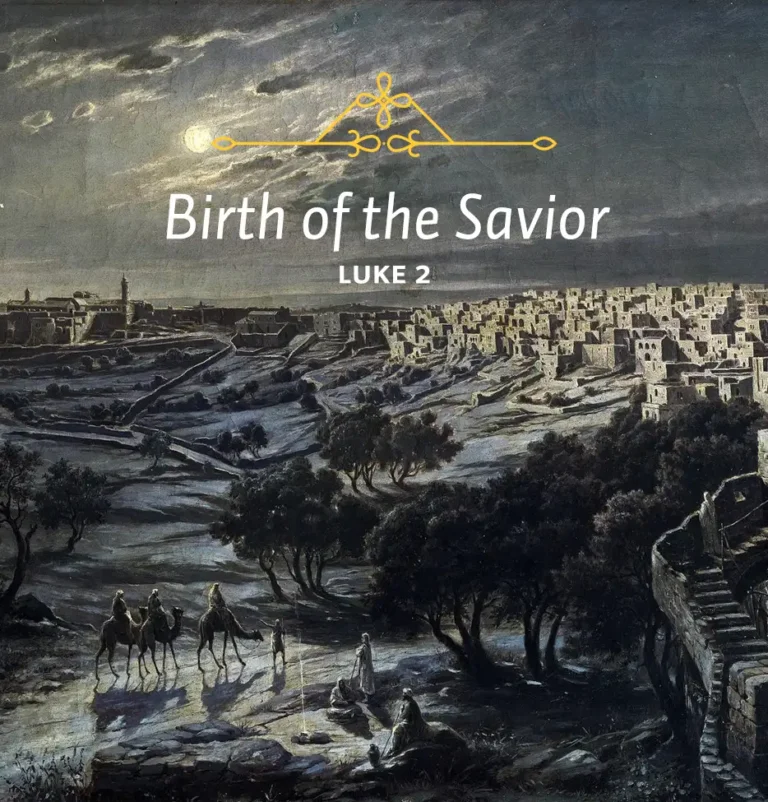
Tuesday: The Birth of the Savior

Now there were several reasons why this message was a message of joy to the shepherds and why, in exactly the same way, it must be a message of joy to us. And the first is that it had to do with the Savior.

Keep Reading

Wednesday: Jesus, the Anointed One

Now Jesus Christ was announced by the angels to the shepherds as the One who solves that sin problem. He solved it by His own death. He came to die for our sin. Our sin means that we, in our basic nature, are at odds with the God of the universe. And because we’re in opposition to the God of the universe, we’re at odds with all of the laws that govern the universe, all the moral laws that should provide for our well-being if we were obeying that God. And our sin has erected a great barrier between ourselves and God.

Keep Reading

Thursday: Christ the Lord

You know, it’s an interesting feature of this word, “Messiah” (“Anointed One”), that in the Old Testament period, there were three classes of people who were anointed. The prophets were anointed, the priests were anointed, and the kings were anointed. It’s also an interesting feature that neither one was to cross over into the bounds of the other. But when the Messiah comes, the Anointed One, He is to be a Person who embraces all three of those offices in Himself.

Keep Reading

Friday: Sharing This Good News

If He’s Lord, He must be obeyed. And if He’s Savior, He must be Lord. Jesus didn’t allow anyone to think that somehow they could be saved and do their own thing. But if they were going to be saved, it was going to be by Jesus the Savior, who is at the same time the Lord. And it was impossible to have one part of Him without having the other. By nature we don’t want that kind of Savior, but that’s the kind of Savior we very much need.

Keep Reading
Last Will & Testament

Monday: A Great Chapter

The fourteenth chapter of John’s gospel is great for several reasons. It is great because of its contents, and it is great because of the situation to which it speaks. The chapter begins, “Do not let your hearts be troubled.” But the reason Jesus spoke those words is that the disciples were troubled and had every cause to be. As a matter of fact, earlier even Jesus was troubled. He said, “Now my heart is troubled” (John 12:27). Here the disciples are troubled, and Jesus says to them, “Do not . . . be troubled.”

Keep Reading
Last Will & Testament

Tuesday: A Place Called Heaven

But what I want to say is that heaven will become increasingly precious to us as we live out the course of our lives and that it is meant to be a consolation to us even now. That was the point with the disciples. They were going to be faced with death in just a few hours. Jesus Christ, the one whom they were closest to, the one they loved and had given their whole lives to, was going to die. But He said, “Do not be troubled, because death is not the end. There is life beyond. There is a heaven, and I am only going there to prepare a place for you.”

Keep Reading
Last Will & Testament

Thursday: Knowing God

In knowing Jesus Christ we really do know God. God is not a mystery. God is not that supreme being who stands so far behind creation that we cannot even begin to know what He thinks, what He wants, or who He is. God has revealed Himself in Jesus Christ. What is God like? He is like Jesus. How do we see Jesus? We see Jesus in the Scriptures.

Keep Reading
Last Will & Testament

Friday: Prayer and Peace

When our Lord gets to the end of this chapter, He says in v. 27, “Peace I leave with you; my peace I give you. I do not give to you as the world gives. Do not let your hearts be troubled and do not be afraid.” Do you see how this comes back to the beginning? What did Jesus say in verse 1? He said, “Do not let your hearts be troubled.” Then, when He gets to the end, He says, “I give you my peace. And because of this you do not need to be troubled.” Jesus did not promise that life will be free of difficulties, but He did promise the means of living in the midst of our difficulties.

Keep Reading
The Beatitudes

Monday: Understanding the Beatitudes

No portion of our Lord’s teaching is better known and probably no portion of the Word of God is more difficult to read than the Beatitudes given in Matthew 5. This is because it is impossible to read these verses without realizing acutely that while they may describe the Lord Jesus Christ, they most certainly do not describe us.

Keep Reading
The Beatitudes

Tuesday: The Poor in Spirit and Those Who Mourn

In the first beatitude we stand before God, not in our pride, but in poverty of spirit, recognizing our need. As we stand before God we see Him in His holiness and are inevitably conscious of our own sin. So in the second beatitude Jesus says that we are not only to see that sin, but to mourn for it.

Keep Reading
The Beatitudes

Wednesday: Inheriting the Earth

In Christian terms this means that believers must use all the force at their disposal to speak out against the sinfulness of the world. But at other times, perhaps when their own rights are intruded upon, they must step back and allow the Lord to be their defender.

Keep Reading
The Beatitudes

Thursday: Hungering after and Practicing Righteousness

The fourth beatitude encourages a hunger and thirst after righteousness. It stands at the center of them all. Righteousness is what we most lack, and, therefore, our greatest problem is how we as sinful men and women become right before God. We can deal with other problems. We can find partial solutions. But if we are not right before God we have missed the only thing that matters ultimately.

Keep Reading
The Beatitudes

Friday: When Persecution Comes

We are to work for peace in all areas of our lives: in the community where we work, at church, school, store, or on the international scene. In yourself you may not want to be a peacemaker. You may want to retaliate for wrongs and lash out against personal hurts. But this is not Christ’s way. He says, “Blessed are the peacemakers, for they will be called sons of God.”

Keep Reading
The Via Dolorosa

Monday: The Way of Love

It would not take a great spiritual genius or even a great literary genius to pick 1 Corinthians 13 as one of the greatest chapters in the Bible. It deals with love, and according to the very teaching of the chapter love is the greatest of all the things one could be considering (v. 13). Love is greater than hope. It is even greater than faith, without which it is impossible to please God.

Keep Reading
The Via Dolorosa

Tuesday: The Importance of Love

Paul teaches the importance of love by contrasts. He says that if he could speak with the tongues of men, or even angels, but without love, it would be nothing. Or prophecy: “If I have the gift of prophecy and can fathom all mysteries and all knowledge” but if I do not have love, it is nothing. Or faith: “If I have faith that can move mountains, but have not love, I am nothing.” Finally, “If I give all I possess to the poor and surrender my body to the flames, but have not love, I gain nothing.”

Keep Reading
The Via Dolorosa

Wednesday: The Nature of Love

The second section of the chapter deals with love’s nature. In the Greek language there are three main words for love. C.S. Lewis wrote a book in which he added another word, but generally speaking the common words for love are: eroo, from which we get our word “erotic”; phileo from which we get the word “philanthropic”; and agapao, which refers to the divine love. All three types of love are known to the biblical writers. But it is interesting that when the Bible writes about love, it uses only two of these words.

Keep Reading
The Via Dolorosa

Thursday: The Standard of Love

Whom do you think of when you read these verses? “Love is patient, love is kind. It does not envy, it does not boast, it is not proud. It is not rude, it is not self-seeking, it is not easily angered, it keeps no record of wrongs. Love does not delight in evil but rejoices with the truth. It always protects, always trusts, always hopes, always perseveres.” Do you know anyone like that?

Keep Reading
The Via Dolorosa

Friday: The Permanence of Love

The reason why you and I do not love is that we are not aware of love, and the reason we are not aware of love is that we do not think often enough of Jesus. As we learn how He loves us, we will learn to love Him and each other.

Keep Reading
Revelation

Monday: Mercy in the End

A funeral service of the Book of Common Prayer is a very beautiful thing—both in its simplicity and in the wise way it uses Scripture. The Old Testament readings have to do with many of the psalms. There is the twenty-third as you can imagine, as well as the forty-sixth, which tells us that the Lord is our refuge and our strength.

Keep Reading
Revelation

Tuesday: Jerusalem and Babylon

It’s really not possible to come to this chapter at this point in the Bible, right at the end, without realizing that when John has this vision of the new Jerusalem coming down out of heaven, this is in contrast to practically all of the great themes preceding this that have to do with our normal, earthly expectations. Jerusalem is certainly contrasted with Babylon, which is mentioned just a few chapters before. Babylon stands for everything that is human in opposition to God.

Keep Reading
Revelation

Wednesday: The Throne of God and of the Lamb

When John begins to describe this in chapter 21, the thing that impresses him most about Jerusalem is that God dwells there. He writes, “I saw the Holy City,” he says, “the new Jerusalem, coming down out of heaven from God, prepared as a bride beautifully dressed for her husband. And I heard a loud voice from the throne saying, ‘Now the dwelling of God is with men, and he will live with them. They will be his people, and God himself will be with them and be their God’” (vv. 2-3).

Keep Reading
Revelation

Thursday: A Description of the City

John begins to describe some of the other details, and he talks about this great wall all the way around it. A wall would symbolize protection, and so you have an image there of our eternal security and safety. He talks about the twelve foundations. Why twelve? Well the reason is that they relate to the twelve apostles of the Lamb in verse 14. And the reference to the twelve apostles goes along with the twelve gates in the city, which represent the twelve tribes of Israel. This shows us the kind of base upon which this heavenly community is established.

Keep Reading
Revelation

Friday: “The Lord Is There”

The appearance of this city of God, the new Jerusalem, is in a certain sense the culminating point of the entire Bible. This is the destiny for which we were created. But unless, by the work of Christ, you are a new creature, you can take it on the authority of the Word of God that you will never enter that city. So we need to search our hearts. We need to make our calling and election sure. We need to say: “Lord Jesus Christ, am I really yours? Have you really changed me? Have I been made a new creature?

Keep Reading
I am the Life

Monday: A New Hope

During the first pre-Christian century a famous letter was written by Sulpicius Severus, a Roman, to Cicero, the great orator, on the occasion of the death of Cicero’s beloved daughter Tullia. The letter expresses deep sympathy and reminds the orator that his daughter had only experienced the common lot of mankind and had only passed away when the freedom of the republic itself was failing. It is warm and moving, but it contains nothing of a sure hope of life beyond the grave. In reply, Cicero thanks his friend for his sympathy and enlarges upon the magnitude of his loss.

Keep Reading
I am the Life

Tuesday: Turning to Jesus First

Now trouble came into the family of Mary, Martha and Lazarus, and Jesus was not there to help them. He had been there a few days previously, but He had gone away, telling them where he was going. While He was gone Lazarus took sick, and the sickness was serious enough for the sisters to send for Jesus. The messenger who bore the report told Jesus, “Lord, behold, he whom thou lovest is sick.” There is a lesson at this point, and we should acknowledge it before we go further.

Keep Reading
I am the Life

Wednesday: The Lord’s Delay

In yesterday’s study, we noted that Jesus returned to Bethany after a delay of two days. Upon arriving, He was told that Lazarus had been dead four days. This meant that Lazarus must have died before Jesus had even received the message that Lazarus was sick. And this means that Jesus knew of Lazarus’ death from the beginning and delayed His return for a specific purpose.

Keep Reading
I am the Life

Thursday: Contrasts in Faith

The story continues with Christ’s return to Bethany. Jesus does not go right into the city since the rulers of the Jews had determined to kill Him and He did not wish His presence known. Instead He waits outside. As He waits Martha hears that He has come and goes to meet Him. Mary waits in the home.

Keep Reading
I am the Life

Friday: Present and Future Resurrection

Now what did Jesus teach these women? He taught that He is the resurrection and the life. The statement is in John 11:25, and it contains two thoughts. First, in Jesus the resurrection is present, for Jesus Himself is life. Martha was thinking in terms of a resurrection at the end of time, a bodily resurrection. Jesus taught that the real resurrection, the one that makes all the difference between real life and real death, is the resurrection that takes place in the individual when he comes face to face with Himself. He is the resurrection. Where He is, there is life.

Keep Reading
Until the Third Day

Monday: Plans Against the Third Day

It’s a strange fact about Christianity, but one that we can easily observe, that the Gospel is sometimes better understood by those who are not Christians than by those who are. It’s not that those who are not Christians believe it. They probably disbelieve it, but at least they understand what it’s about while those who are Christians and do believe sometimes appear vague and muddleheaded in their confession.

Keep Reading
Until the Third Day

Tuesday: Jesus’ Trial

Yesterday, we concluded by saying that during Jesus’ trial before the religious leaders, these men tried to find something they could accuse Jesus of. However, nothing they said could be established, even though many false witnesses were brought against Jesus. Two came forward and declared, “This fellow said ‘I am able to destroy the temple of God and rebuild it in three days.’” And Mark gives another detail of it: “We heard him say, ‘I will destroy this man-made temple and in three days I will build another not made by man’” (14:58).
That was very interesting, and it was so for two reasons.

Keep Reading
Until the Third Day

Wednesday: Their Fear of Jesus

Not only did they understand the teaching, but they feared the teacher. Oh, they wouldn’t have said that. They were not afraid Jesus might rise from dead. Instead, they feared that Jesus’ disciples might come and steal the body and claim Jesus had risen from the dead. But deep down underneath, who was it they really feared? Was it the disciples? That insignificant band of cowardly men who didn’t even have the courage to stand by their Lord at the time of the arrest and the trial and who scattered at the crucifixion, who were nowhere around and couldn’t be found? Was it really that weak, insignificant band they feared? Or did they really fear the Master?

Keep Reading
Until the Third Day

Thursday: Their Use of Judas

And then the religious leaders came to the point in time not far from Jesus’ arrest, and Christ did this stupendous miracle of the resurrection of Lazarus. It was the talk of the town and isn’t it true that somewhere in their thinking there was the idea that perhaps, although they would have liked to arrest Him, they just might not be able to do it.

Keep Reading
Until the Third Day

Friday: The First Day of the Week

We rejoice in hearing of people becoming Christians, learning of people moving from mere understanding of the facts of the Gospel and going beyond that to saving faith in the one who did what He said He would do and rose triumphant, in order that He might live in His church by His Spirit and draw men and women to Him in this age of God’s grace.

Keep Reading
As Safe as You Know How

Monday: Securing the Tomb

Usually the Bible is not a funny book. The issues with which it deals are too grave. But the Bible is an honest book, and when it reports situations in life which are naturally funny it reflects them honestly and therefore with an appropriate sense of humor. There is a situation like this in Matthew’s account of the death and burial of Jesus Christ, preceding His resurrection.

Keep Reading
As Safe as You Know How

Tuesday: A Violent Earthquake

Well if the Jewish leaders did not fear the disciples, what did they fear then? I am sure they would not have voiced this openly, but in my judgment what they actually feared was the resurrection. After all, they were not imperceptive, and they had been observing Jesus for the better part of three years. They had seen Him heal the sick, give sight to the blind, cleanse the lepers, restore strength to the impotent. And then, greatest wonder of all, only a few days before His arrest He had actually raised Lazarus of Bethany from the grave.

Keep Reading
As Safe as You Know How

Wednesday: A Blinding Light

So in opposing Jesus the first thing Saul was trying to secure was his Judaism. But there was also a second item that he was desperately trying to secure, namely, himself. Later his situation during this period was described as trying to “kick against the goads” (Acts 26:14), like an animal fighting one who is prodding it to go in a right direction. This meant that, although Saul was fighting against the Christians with intense zeal, he was at the same time fighting an even more intense struggle within the secret chambers of his heart.

Keep Reading
As Safe as You Know How

Thursday: A Thriving Fellowship

There was another character who got into the act. In fact, he had been leading the battle against the Lord Jesus Christ for centuries. His name is Satan. We see him first in the Garden of Eden, where he tempts Eve to eat the forbidden fruit and thus participates in the ruin of the race. We see him in Egypt and in other nations as they persecuted God’s people, through whom the Messiah was to come. At last we see him waging war against the incarnate Jesus.

Keep Reading
As Safe as You Know How

Friday: An Inescapable Surrender

I wonder if you have been confronted by the power of that resurrection. The chief priests and Pharisees tried to secure their ecclesiastical world against Jesus. Saul tried to secure his religious traditions and life. Satan had been trying to secure his evil kingdom. Perhaps you too have been trying to secure your own way of doing things or your own values or your own mastery of your time.

Keep Reading
Rewards instead of Punishment

Monday: The Resurrection and Jesus’ Enemies

Each year at Easter time, when I turn to these stories of the resurrection of Jesus Christ, I find myself wondering what I’m going to find new to preach on. When you’ve been doing this as many years as I have now, you begin to have the feeling that you have preached just about everything you can, given the rather limited corpus of material. And yet, each year as I turn to these stories, I find that there’s something there I never saw before.

Keep Reading
Rewards instead of Punishment

Tuesday: When Unbelief Is Rewarded

The soldiers had not left their post, and the tomb was empty. They must have been terrified, wondering what was going to happen to them. After the religious leaders met together, they did not seek to have the soldiers punished. Instead, the guards were told to lie about what had happened.

Keep Reading
Rewards instead of Punishment

Wednesday: A Bizarre Idea

Here’s a case, which like so many others, shows us a man who proposes a theory to explain away the reality of the resurrection. And instead of being rebuffed or forgotten, as Schofield and his book should have been, he is rewarded. It’s a case of rewards instead of punishments.

Keep Reading
Rewards instead of Punishment

Thursday: The Reaction of Jesus’ Friends

But now I want you to look at something else. I want you to turn from thinking about those enemies of Christ, who are exemplified by the soldiers and the priests on that first Easter Sunday, and instead I want you to focus on Christ’s friends, those who learned of the resurrection and who met with Jesus Christ following His resurrection.

Keep Reading
Rewards instead of Punishment

Friday: Waiting for the Great Reversal

One day there will be a great reversal. As is often the case in this life because of sin and the commitment that men and women have to unbelief, that unbelief is rewarded and the truth is punished. That’s happened before, and it will happen again. But, nevertheless, God is on His throne. The day is coming when all of that will be overturned. Unbelief will be judged, sin will be punished, and those who stand with the Lord Jesus Christ will hear Him say, “Well done, thou good and faithful servant. Enter into the joy of your Lord.”

Keep Reading
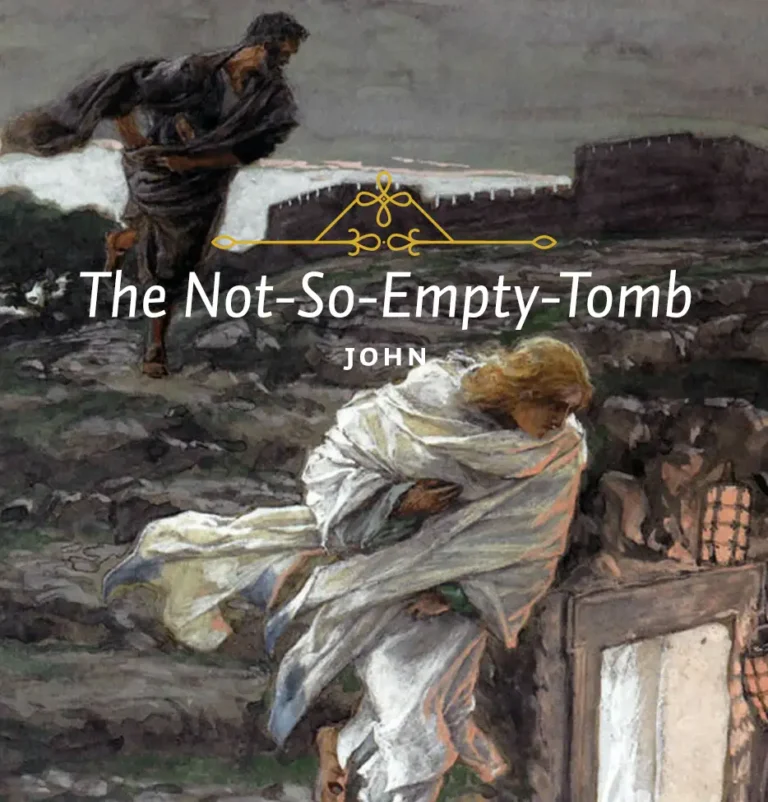
Not So Empty Tomb

Monday: Events of Easter Morning

One of the great historical evidences of the resurrection of Jesus Christ is the fact of the empty tomb. But the remarkable and quite startling fact is that when Peter and John arrived at the tomb on the first Easter morning it was not quite empty. That’s right, the tomb on Easter morning was not quite empty. The body of Jesus was gone, but something was still there. The graveclothes remained behind. And the Bible suggests that there was something about them so striking that John at least saw them and believed in Jesus’ resurrection.
Keep Reading
Not So Empty Tomb

Tuesday: Jewish Burial

Mary meanwhile found the two chief disciples Peter and John, presumably in John’s house where the beloved disciple had taken Mary, Jesus’ mother. The two disciples immediately started for the tomb, running and leaving Mary far behind. John was the younger man. Consequently, he arrived at the tomb first, stooped to look through the narrow aperture, and saw the graveclothes.

Keep Reading
Not So Empty Tomb

Wednesday: The Resurrection

Now what would we have seen had we been there at the moment at which Jesus was raised from the dead? Would we have seen Jesus stir, open His eyes, sit up, and begin to struggle out of the bandages? Is this what we would have seen? Not at all. That would have been a resuscitation, not a resurrection. It would have been the same as if He had recovered from a swoon. Jesus would have been raised in a natural body rather than a spiritual body, and that was not the case at all.

Keep Reading
Not So Empty Tomb

Thursday: What Peter and John Saw

At this point Peter arrived and went into the sepulchre. Undoubtedly Peter saw what John had seen, but in addition he was struck by something else. The cloth that had been around the head was not with the other clothes, it was lying in a place by itself (v. 7).

Keep Reading
Not So Empty Tomb

Friday: Our Own Coming Resurrection

The second lesson from this story is this. The experiences of Peter and John at the tomb also indicate that the body of the Lord was glorified. It was sown a natural body and was raised a spiritual body. And in this body Jesus lives, seated at the right hand of God where He waits in glory, interceding for His own until the moment when He will return again in judgment.

Keep Reading
The Day Faith Died

Monday: “I Will Not Believe”

When Jesus died, the faith of His disciples died. There was much about Jesus that they didn’t understand, but what they did understand, they believed and they followed Him because of this. For the three years they were with Him, He was their life. Where He went, they went. What He said, they heard. What He instructed, they tried to obey. Then all of a sudden, even though He had warned them of it, He was taken away, tried and crucified. And they were utterly despondent. So you see, in a sense we can say that when Jesus died, His disciples died too.

Keep Reading
The Day Faith Died

Tuesday: “We Had Hoped”

Now if Thomas is a great example of the death of faith, the Emmaus disciples, whom I identify as Cleopas and his wife Mary, are great examples of the death of hope. They had been in Jerusalem during the days of the Passover and had hoped that Jesus was the Messiah who would usher in His kingdom. They had heard that certain women whom they knew had gone to the tomb and had returned saying that Jesus had risen from the dead. Yet so far were they from believing in a resurrection, so far were they from having any Christian hope whatsoever, that they didn’t even bother to go to the tomb to investigate themselves. It was done, and so they started out for their home in Emmaus.

Keep Reading
The Day Faith Died

Wednesday: Love Lives

We don’t know a whole lot about Mary Magdalene. We’re told in Luke 8 that Jesus had done a mighty work of grace in her life by casting out seven demons. We know that she was one of the women who ministered to Jesus and the disciples. But that’s about all we know until we come to the activities during this last week of Christ’s life.

Keep Reading
The Day Faith Died

Thursday: Confusion and Distress

Now when the women arrived at the tomb with their spices, it suited their purpose to have the stone removed, but it wasn’t what they were expecting. They were confused and asked each other what they should do. And they decided that Peter and John should be told. Either they appointed Mary to the task, or Mary volunteered. So she’s the one who started off to find the disciples to give them the message.

Keep Reading
The Day Faith Died

Friday: The Greatest of These

What happened in that instance was the resurrection of Mary. She, no less than the others, had experienced the death of faith and the death of hope. But when the living Lord spoke her name and thereby revealed Himself to her, her faith, which had died, came leaping from its grave, and her hope, which had evaporated, gathered again around the person of her Lord.

Keep Reading

Monday: Jesus’ Resurrection Sermon

One of the great accounts of the appearances of the Lord Jesus Christ to His disciples following the resurrection is His appearance to the two Emmaus disciples recorded in Luke 24. It is an interesting story for a number of reasons, and one is that Jesus preached a sermon on that occasion. It is referred to in verse 27: “And beginning with Moses and all the Prophets, he explained to them what was said in all the Scriptures concerning himself.”

Keep Reading

Tuesday: Peter’s Sermon at Pentecost

Today we look at some of the texts Jesus must have used in His sermon, which we discussed yesterday. An obvious place to begin is with Peter’s speech at Pentecost found in Acts 2. Peter used three texts in that message. The first was about Pentecost itself. It was from Joel—the prophecy that in the last days, God was going to pour out His Spirit upon all flesh (Joel 2:28-32; see Acts 2:17-21). Peter explained that Joel’s words were being fulfilled right then in the sight and hearing of the people. Then he went on to preach about Jesus. To do that he drew on two more texts from the Old Testament.

Keep Reading

Wednesday: Peter before the Sanhedrin

In the fourth chapter of Acts we have another of Peter’s sermons. Here he has been called before the Sanhedrin (the highest council of the ancient Jews), and he is defending himself and his teaching. We have a relatively short record of this sermon in verses 8-12, but in the midst of it we have another important Old Testament text applied to Jesus. It is Psalm 118:22, which Peter cites, saying, “The stone you builders rejected …has become the capstone” (Acts 4:11).

Keep Reading

Thursday: “In All the Scriptures concerning Himself”

In the eighth chapter of Acts, we have another suggestive text. Here Philip has been sent to the Ethiopian eunuch. When Philip finds him, he is reading from a manuscript he acquired in Jerusalem. It turns out that it is Isaiah, and the portion from which he is reading is Isaiah 53: “He was led like a sheep to the slaughter, and as a lamb before the shearer is silent, so he did not open his mouth. In his humiliation he was deprived of justice. Who can speak of his descendants? For his life was taken from the earth” (Acts 8:32-33).

Keep Reading

Friday: Having Your Eyes Opened

I say as we end this week of Easter readings that I do not know how much of what I have presented this week is what the Lord preached that day on His walk from Jerusalem to Emmaus. But it was a long trip. It would have taken several hours. And I suppose, therefore, that Jesus preached not only what I have tried to explain here, but also a great deal more besides. What I am certain of is this: The Lord preached the Gospel from the Old Testament.

Keep Reading
Walk the Emmaus Road

Monday: Cleopas and Mary

I believe that the road to Emmaus is a road that must be walked, in one sense, by everyone who would become a Christian, or would become a better Christian. And it is in that light that I would like us to study it. The walk started out in disbelief and sadness. It ended in joy, excitement, love, and true devotion. The same can happen to each one of us.

Keep Reading
Walk the Emmaus Road

Tuesday: Disbelief and Sadness

The morning after the Saturday Sabbath then came. Mary went to the tomb to anoint the body with the other women, leaving Cleopas to get their things together. She saw the angels, returned to tell Cleopas about it, and then—and now look how utterly remarkable this is—joined him to preparing to leave. So far from her thinking was any idea of the literal truth of Christ’s bodily resurrection!

Keep Reading
Walk the Emmaus Road

Wednesday: The Road to Emmaus

What is it that accounts for a belief in the resurrection on the part of Christ’s disciples? The answer is nothing but the resurrection itself! If we cannot account for the belief of the disciples in that way, we are faced with one of the greatest enigmas in world history.

Keep Reading
Walk the Emmaus Road

Thursday: Three Openings

When Jesus began to open the Scriptures to Cleopas and Mary, He initiated the first of three openings that are mentioned in this chapter. He opened the Scriptures; He opened their eyes; and He opened their understanding. These are so significant that they would make an outline for a study all by themselves.

Keep Reading
Walk the Emmaus Road

Friday: Three Blessings

Now there is a great deal more to the story of Cleopas and Mary because of their meeting with the Lord Jesus Christ. For each of these three openings had an important consequence in their lives. And these three results should also occur for us when our Bibles, eyes, and minds are opened.

Keep Reading
The Best News ever Heard

Tuesday: Evidences

Next there is the evidence of the empty tomb, coupled with the evidence of the moved stone and the undisturbed graveclothes. How are we to account for these things? Some have imagined that either Joseph of Arimathea or the Roman or Jewish authorities moved the body. But not only was there no reason for this to have been done—it would have involved violating the officially sealed tomb—it is also inconceivable that the true circumstances would not have been revealed later after the disciples had appeared in Jerusalem to proclaim their belief in Christ’s resurrection.

Keep Reading
The Best News ever Heard

Wednesday: Victory!

Second, the resurrection of Jesus Christ is good news because it came after an apparent defeat. A victory is always good news. But news of victory after news that a battle has apparently been lost is even better.

Keep Reading
The Best News ever Heard

Thursday: Essential Doctrines

Second, the resurrection of Jesus Christ proves the deity of our Lord. When He lived upon earth Jesus claimed to be equal to God and that God, this same God, would raise Him from the dead three days after His execution by the Roman authorities. If He was wrong in this, His claim was either the raving of a deranged man or else blasphemy. If he was right, the resurrection would be God’s way of substantiating the claim.

Keep Reading
The Best News ever Heard

Friday: Our Response to the Resurrection

We may be weak and utterly helpless, unable to resist temptation for a single minute. But He is strong, and He lives to give help and deliverance in every moment of our days. Victory isn’t a question of my strength, but of His power. His power is what I need.

Keep Reading
Death Vanquished

Monday: Death an Enemy

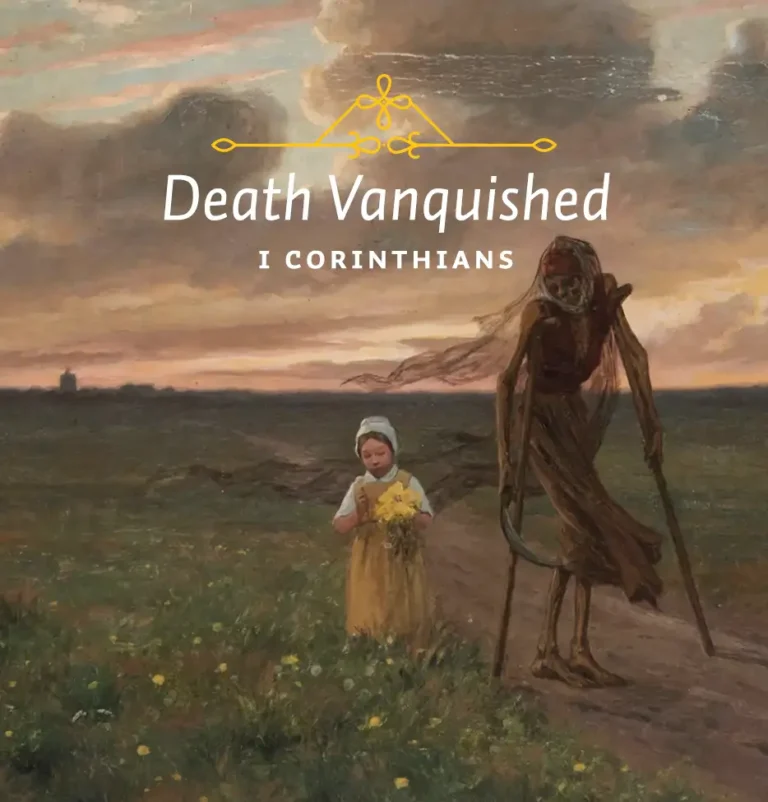
I do not think I need to say a great deal about the importance of this chapter as concerning the resurrection. Next to the resurrection accounts as we find them in each of the four gospels, this chapter is of the greatest importance. What I have discovered to be quite interesting, however, as I have studied it, is that it deals with what we would consider a depressing subject as much or even more so than it deals with the glorious theme of the resurrection. I am talking about death, of course, and the two are connected because it is only as we understand the significance and the horror of death that we understand the importance and glory of the resurrection.

Keep Reading
Death Vanquished

Tuesday: The Ultimate Enemy

And may I say something else? Death, if you understand it spiritually, is not only an enemy, it is, secondly, also the ultimate enemy, the greatest enemy there is. I think we sense this in our fear of death. We are afraid of death, even though death is transformed for Christians and fear is changed in some sense.

Keep Reading
Death Vanquished

Wednesday: Ultimate Victory

When the Lord Jesus Christ transforms us, He saves us in spirit and soul so that we have a new spirit and a new soul, and by means of death are taken into the presence of Himself. And then at our resurrection He saves us in body also. It becomes, not just a spiritual salvation, not just a soul salvation, but a whole salvation.

Keep Reading
Death Vanquished

Thursday: Our Victory over Death

Fourth, I want you to see not only that death is an enemy, not only is death the ultimate enemy, and not only is there an ultimate victory over death for us. But I also want you to see that there is a present victory now because the resurrection of the Lord transformed even the kind of death that we know now in our own time and in our own existence and experience.

Keep Reading
Death Vanquished

Friday: Be Steadfast

But at the same time, Jesus’ death is not just a literal death; it is also a literal resurrection. A real resurrection with a real body and a real person standing there that they could handle and touch and furthermore the kind of person who could eat broiled fish to demonstrate the reality. It was no ghost.

Keep Reading
Remember the Resurrection

Monday: The Gospel of Jesus’ Resurrection

There are many facts in life that we are called upon to remember—appointments, vital pieces of information, names of acquaintances, even incidents from the past that are supposed to have significance. “Remember the Alamo” was a rallying cry to Texans at the time of the war with Mexico. “Remember the Maine” served the same purpose at the time of the Spanish American War, following the sinking of the USS Maine in Havana harbor in 1898. In World War II the saying was “Remember Pearl Harbor.” The interesting fact about these sayings is that each refers to a defeat. The saying that I want to take you to today is different and is also more important, for it is a challenge to remember a victory.

Keep Reading
Remember the Resurrection

Tuesday: A Simple Gospel

In yesterday’s study we said that people need a simple Gospel, not a simplistic Gospel—which we defined as one that is superficial and does not grapple with the deepest problems people have. But when I am talking about a “simple” Gospel, that is something else. It is a gospel that is simple because it brings simplicity to areas that would be hopelessly confusing without it.

Keep Reading
Remember the Resurrection

Thursday: A Scriptural Gospel

Third, we are to remember the resurrection because so long as we remember it, we will always have a scriptural Gospel. This means that our faith will not be a novelty. Instead, we will have a faith linked—as all true faith must be linked—to God’s great and eternal purposes in human history.

Keep Reading
Remember the Resurrection

Friday: A Satisfying Gospel

Finally, we are to remember the resurrection of Jesus Christ because if we do remember it, we will always have a satisfying Gospel. The truth of the resurrection of Jesus Christ satisfies. There is so much in life that is not satisfying. In some cases we may be satisfied for a time. But the pleasures soon pale and the satisfaction fades.

Keep Reading
Easter Sunday

Monday: Meeting the Angel

Can you imagine how these exact words must have been impressed on the minds of these women? They could never forget them. Remember, they had come to the tomb on that early Easter morning, certainly not expecting what they found. They were preoccupied with one thing, and that was to anoint Jesus’ body with the spices they had bought.

Keep Reading
Easter Sunday

Tuesday: Come and See

Or again, there was the edict of Rome. The tomb had been sealed by Pilate’s order. The soldiers were stationed at the tomb in order to guard it. Now, something had happened: the stone had been removed, and that meant that the seal had been broken, and Rome had been disobeyed. The women might have said, “Oh, but Rome forbids us, we can’t come closer. We can’t look in.” They might have failed to come for that reason.

Keep Reading
Easter Sunday

Wednesday: Reasons to See the Tomb

The third reason we should come and see the tomb is that we might be reminded that we also will lie there. Unless the Lord Jesus Christ comes for His own before we die, we too must die. There is a time when we will be separated from all that we know now. We will leave friends and loved ones. We’ll leave all our material possessions; we’ll leave all that we know behind. So we look to the tomb and we say, “What does this have to teach us of our mortality?” It teaches us that we are mortals and that there is a life beyond for which we must prepare.

Keep Reading
Easter Sunday

Thursday: Work to Be Done

Now we’ve looked at two of the words of the angel’s message. We’ve looked at the invitation to come and the imperative to see. We’ve seen some of what that implies for us. The third word is “go” (v. 7). It’s a reminder that, blessed as it may be to stay near the tomb, nevertheless there is still work to do and we should not linger around the tomb.

Keep Reading
Easter Sunday

Friday: A Message to Tell

This leads me to the fourth and last point, which is the word “tell.” There’s a wonderful sequence to these four words. If we come, if we see that the tomb is empty, if we are commissioned to go, then it is inevitable that we must have a message to tell. Good news must be told. If we don’t tell it, we don’t really recognize how good it really is.

Keep Reading

Monday: Sharing the Message

In nearly every case where the Lord Jesus Christ appeared to someone after His resurrection, He gave them instructions to take the message to someone else. For instance, when He appeared to Mary Magdelene in the garden, Mary didn’t recognize Jesus at first. But when He spoke her name, she recognized His voice, responded to Him, and then He gave her this word of instruction: “I am going to my Father and your Father, to my God and your God. Now go quickly and tell my disciples.”

Keep Reading

Tuesday: Christ’s Authority

Now as we look at this commission, we see three parts to it. First, there is an announcement of Christ’s authority, which we find in verse 18: “All authority is given unto me in heaven and in earth.” Second, we find a command: “Go ye therefore and teach [make disciples of] all nations, baptizing them in the name of the Father and of the Son and of the Holy Ghost, teaching them to observe all things whatsoever I have commanded you” (vv. 19-20). And then third, we have a great promise: “Lo, I am with you alway, even unto the end of the world” (v. 20).

Keep Reading

Wednesday: Christ’s Command

Jesus is the King of kings and the Lord of lords. His authority transcends all other authority. Now there are other legitimate authorities as well and we’re instructed to recognize them. There is the authority of the state. There is the authority of parents. There is the authority of church officers. These are all legitimate authorities. But over all of these authorities is the authority of the Lord Jesus Christ, and it is on the basis of that authority over us as individuals within the church that He makes the Great Commission which follows.

Keep Reading

Thursday: Obeying the Great Commission

It’s easy to look back to the resurrection on Easter Sunday and say how marvelous it is that Jesus rose from the dead two thousand years ago, and then go home to your dinner and leave it at that. But if Jesus rose, and if He is the Lord that His resurrection declares Him to be, this is the Lord who tells you to go into the world and to tell others that He is risen from the dead. Furthermore, Jesus doesn’t make the Great Commission vague, because He tells us how to do it.

Keep Reading

Friday: Christ’s Promise

Proper evangelism, proper missionary work, proper Christian activity is to go out with the Gospel, win men and women to Christ, and bring them into the fellowship of the church where they are then taught the things that are found in the Scripture. Christianity is a full-orbed doctrine and approach to life which we grow into increasingly as we share and study Christ’s Word.

Keep Reading
Saints & Sinners

Monday: Background to the Letter

Every time I begin a study of a new book of the Bible I do so with mixed feelings because, on the one hand, the book is a challenge. It is exciting because it is filled with thoughts that we need to make our own. And yet, at the same time, any book of the Bible, as the Holy Spirit speaks through it, as we trust He will and as He promises to do when we study it, is going to produce changes in us. It is going to challenge us in areas of our discipleship. It is going to address us in areas in which we need to grow.

Keep Reading
Saints & Sinners

Tuesday: Bright Spots and Problems

Paul visited Corinth on his second missionary journey. He had been in the northern portion of Greece, in Philippi. He had made his way down the coast from Macedonia, spending some time in the city of Berea. He then went further south into Attica and came to Athens, where he spent some time. After he left Athens, he went down to Corinth, leaving for the time his companions behind.

Keep Reading
Saints & Sinners

Wednesday: Good Things in Corinth

Paul writes of the first “bright spot” in the Corinthian church in verse 2: “To the church of God in Corinth, to those sanctified in Christ Jesus and called to be holy together with all those everywhere who call on the name of our Lord Jesus Christ.” He says that the Corinthians are sanctified, or holy.

Keep Reading
Saints & Sinners

Thursday: Troubles in Corinth

When we read that description of the church at Corinth, we think to ourselves how wonderful it would be to be part of a church like that—a church that was separated unto Christ, mature in its knowledge of the doctrines of the faith and their application, a church in which the spiritual gifts were very evident, a church that was eagerly waiting together for the return of Christ. Is not a church like that a marvelous thing? Well, I dare to say I do belong to a church like that. That is a description of the church of Jesus Christ wherever it is truly found.

Keep Reading
Saints & Sinners

Friday: The Corinthian Church and Ours

Be like Jesus Christ. Draw near to Him. And when you do, these divisions begin to fade away and the sin begins to be conquered. This knowledge gives expression to the glorious reality of the fellowship of the people of God. That is what this letter is to do. As you study it, pray that God will use these texts to speak to you and to lead you increasingly in the way that you should go for Christ’s sake.

Keep Reading
Not Many Wise

Monday: The Failure of Human Wisdom

With verse 18 of chapter 1 we come to the first major treatment of a theme that Paul considers in the book, the theme of wisdom and foolishness, the wisdom of God contrasted with the foolishness of men. It is a major section because Paul deals with that not only in the remainder of chapter 1 but throughout chapter 2. And it is not until chapter 3 that he gets back to the matter of the divisions among the church at Corinth that he mentioned in the introduction.

Keep Reading
Not Many Wise

Tuesday: Human Wisdom’s Folly

I suppose there is no greater example of the folly of this world in its profession of wisdom than in the great trust that is put in the theory of evolution. What is really foolish about
evolution is the inevitable attempt to make what is essentially a theory into a kind of religion by using it to try to explain how things came to be, when evolution cannot possibly explain it.

Keep Reading
Not Many Wise

Wednesday: The “Foolishness of God”

A third error in Carl Sagan’s view of the universe is to suppose that somehow in that kind of a closed, materialistic system which excludes God, moral purpose and moral obligation can come about. If I am the accident of the universe, why do I owe anybody anything? I do not. I am not answerable to anything. How am I answerable to an impersonal universe? And yet, Sagan cannot live with that kind of a universe, so he projects moral values into it, apparently not realizing that the impersonal cosmos is not able to account for morality.

Keep Reading
Not Many Wise

Thursday: How God Works

We come now to the third section, where Paul begins to think about how God works. It is not only that God has demonstrated His wisdom at the cross in what Jesus Christ achieved there;
God also demonstrates His wisdom by choosing the foolish people of this world to come to Christ, not the wise.

Keep Reading
Not Many Wise

Friday: Sharing the Gospel with Others

That brings us to the final point that Paul develops in the first verses of chapter 2, which is the implication of all this for the preaching of the Gospel. Paul understood that the power of God was to be found not in the power of men nor in the wisdom of men, but in the simple Gospel of the preaching of the cross. That is precisely why Paul was so determined to preach the message that he did.

Keep Reading
Deep Things of God

Monday: True Wisdom

This portion of 1 Corinthians is one of the great sections of the Word of God for the doctrine of revelation. And verse 10, plus the verses that surround it, are a great analysis of what God has done to make Himself and the Gospel known to fallen men and women who, apart from His revelation, would live and die and perish in utter ignorance of that which alone would be their life and salvation.

Keep Reading
Deep Things of God

Tuesday: Two Aspects of Revelation

Thus, not only do unbelievers fail to recognize God in nature; they also fail to see how God is revealed in the coming of His Son, the Lord Jesus Christ. God’s “secret wisdom” has now been given, but apart from the Holy Spirit people are unable to perceive what God has truly communicated and performed in the person and work of Christ.

Keep Reading
Deep Things of God

Wednesday: Handling Bible Difficulties

Some years ago, I received a letter from a pastor out in western Canada who was asking a number of questions about what he perceived to be contradictions in the pages of the Word of God. I could not tell from his letter whether these were genuine questions, or whether he was one of those people who already had already made up his mind and was just giving in the form of questions the reason why he would not believe that the Bible was the Word of God. I took his letter seriously and I answered it at some length.

Keep Reading
Deep Things of God

Thursday: The Need for Illumination

The problem, as we have mentioned already, is that our minds cannot conceive spiritual truth without the help and blessing of the Holy Spirit. And when you begin to talk about God’s process of revelation, what you come to next in the steps of God’s dealings with fallen human beings is regeneration, by which God takes one who is spiritually dead, and by means of the Holy Spirit makes him spiritually alive through the preaching and teaching of the Word. As a result, he now hears and understands that God has revealed Himself in Jesus Christ in the Gospel and the need for that one to be born again.

Keep Reading
Deep Things of God

Friday: How to Be Wise

Do you want to be wise? That’s a very good ambition. How are you going to be wise? Are you going to find wisdom in the world’s way? Oh, if you seek it that way, you’ll be thought wise by the world but you’ll be spiritually foolish. Or are you going to seek wisdom in God’s way?

Keep Reading
Paul Apollos Cephas

Monday: Worldly Christians?

In my Bible there is a very appropriate section heading to 1 Corinthians 3. It is called “On Divisions in the Church.” Yet as I read this chapter, which is probably the greatest statement in all the Bible against divisions in the Church of Jesus Christ, I realize that it has actually been the cause of at least two more of them. I say that because there are two themes in this chapter that have divided Christians.

Keep Reading
Paul Apollos Cephas

Tuesday: Living Like a Christian

On the other side are those who say, “No you can’t distinguish between Christians in that fashion because if you’re born again, you must be going on with the Lord. You must acknowledge the lordship of Jesus Christ. Christ is no Savior if Christ is not the Lord.” And at that point I speak positively and say, “That is absolutely right. If you’re a Christian, you’re regenerate. It’s impossible to think of a regenerate person not going on with the Lord in some fashion, one who is beginning to grow and to hunger and thirst after righteousness.”

Keep Reading
Paul Apollos Cephas

Wednesday: The Christian Ministry

What is the biblical pattern? Paul says in verse 5: “What, after all, is Apollos? And what is Paul? Only servants, through whom you came to believe—as the Lord has assigned to each his task.” Paul’s emphasis is that the ministers in the church of Jesus Christ are servants, even as Jesus Christ Himself came not to be ministered unto but to serve and to give His life as a ransom for many.

Keep Reading
Paul Apollos Cephas

Thursday: Saved as by Fire

We come now to the third section, which is the second area in this chapter where people have been so divided. Here we are talking about people being saved, as the King James Bible says, “though as by fire.” And the question is, can anybody be saved that way—that is, without any good works whatsoever? This is the way this passage has normally been taken. I want to suggest that this is a wrong interpretation of it, but let me first explain how most people seem to understand it.

Keep Reading
Paul Apollos Cephas

Friday: Not Division, but Unity

As we come to the end of 1 Corinthians 3, Paul brings us back to this matter of divisions in what is really a very brilliant paragraph. Paul is saying, “Think how foolish these divisions are. First of all, they are based upon the world’s way of doing things, which is folly in the sight of God. You don’t want to be like that. God catches the wise in their craftiness. He turns the wisdom of the world to self-evident foolishness before everybody. These divisions are part of that. Instead, you want to follow after God.”

Keep Reading

Subscribe to the Think & Act Biblically Devotional

Alliance of Confessional Evangelicals

About the Alliance

The Alliance is a coalition of believers who hold to the historic creeds and confessions of the Reformed faith and proclaim biblical doctrine in order to foster a Reformed awakening in today’s Church.

Canadian Donors

Canadian Committee of The Bible Study Hour
PO Box 24087, RPO Josephine
North Bay, ON, P1B 0C7