In yesterday’s study we concluded by saying that Roger Nicole used a number of illustrations to show what happens when something that has been created for one purpose takes it upon itself to exercise supposed freedom in another area.
One was a locomotive, which for the purpose of the illustration is able to think and communicate as people do. The locomotive observes to himself how for many years he has been going down the same stretch of track between Boston and Washington, D.C., and he feels confined. What he really wants to do is get off the track and roam around the meadows that he has seen. But if a locomotive were to try to do that, it would not have freedom, but a derailment, at which point it would not be able to have any motion at all.
Nicole also used the illustration of a fish that says, “Well, some people may think that water is delightful, at least in the middle of the summer when it’s hot and they go down to the shore and swim about. But I spend all my life swimming around in the water, and I see the same old things all the time. And as I poke my head out of the water, I notice that there’s another world with land and other things to see. I’d like to come out of the water and be free to explore these things for myself.” But as soon as the fish tries to do that, he would die.
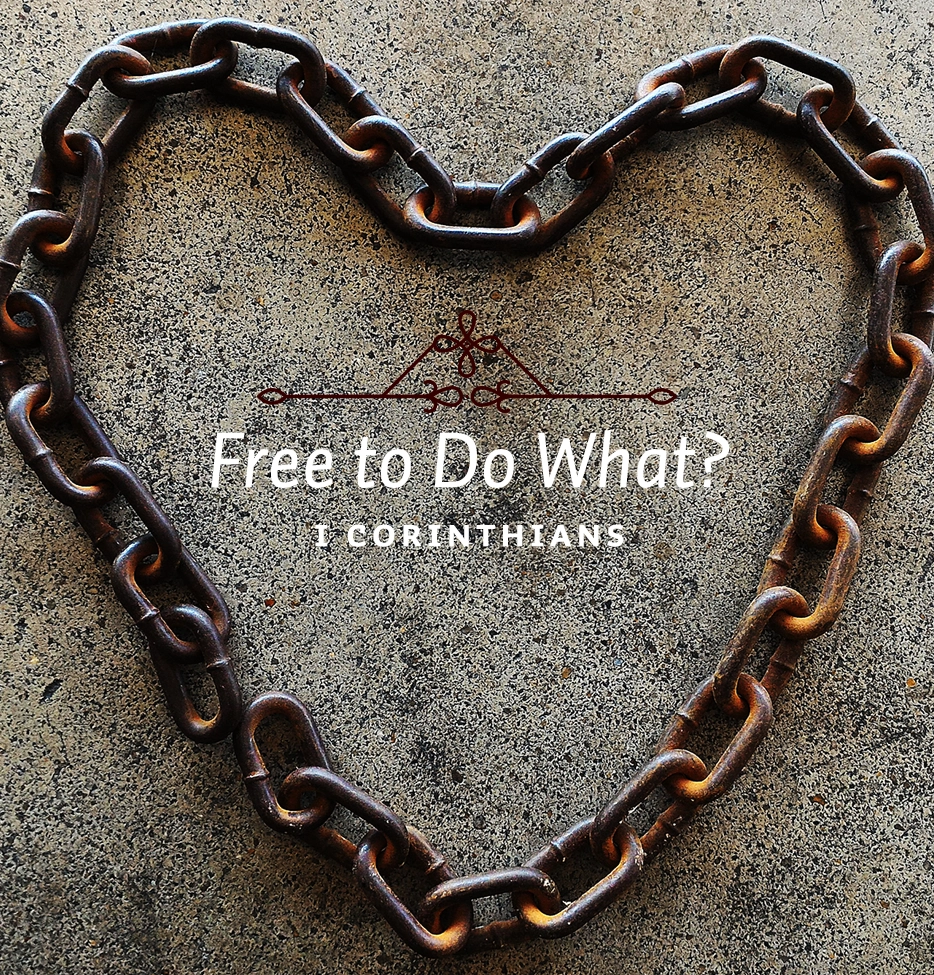
Nicole had a number of other illustrations like that, and his point was that as creatures made in the image of God and made for the purposes of God, for us freedom is not to be found in doing whatever we may like to do, particularly in our sinful state. When we do that, we produce in ourselves something that is similar to the derailment of the locomotive or the death of the fish. Rather, our freedom is to be found in fulfilling the destiny for which God has created us, which, as the first question in the Westminster Shorter Catechism expresses it, is to glorify God and to enjoy Him forever.
I give that illustration to show that the passage to which we have come picks up on the matter of doubtful things once again. It is interesting that in this portion of the letter, Paul comes back to these subjects more than once. He has already dealt with the essential question of what to do with food that has been offered to idols in chapter 8. But then we find him picking it up again in chapter 10. I suppose in one sense, this repetition is because so many of the problems we have as Christians are found in this area. There are certainly things in the Word of God that are explicit where the Word of God speaks clearly. The question there is not what we should do but whether we are going to do it. We can never approach Christianity as if, because we are set free in Christ, we are free to do absolutely anything at all. Anything that is contrary to the revealed law of God is intolerable in the sight of God. We cannot live in sin openly and willfully and call ourselves Christians.
Yet there are areas where we are legitimately confused. Again and again these problems come back to haunt us in the Christian life. We think at one period in our lives that we have solved them. We say that we have wrestled with an issue in the past and have come out on a certain side and believe that based on that, we should act in a certain way. But then later on in our life, circumstances change. And because this is not an area that is spoken of clearly in the law of God, we find ourselves wondering if that was really right. It may be that because of the different circumstances we should approach it in another way.