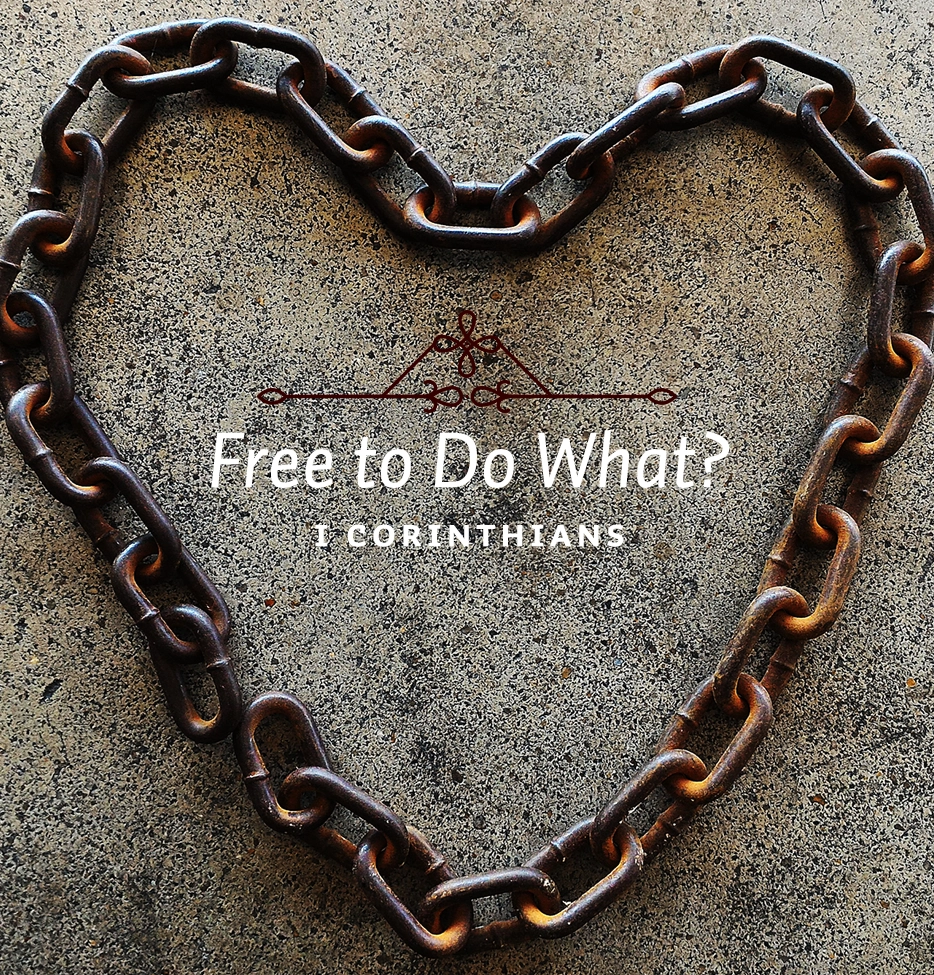
Whenever we talk about freedom it is obvious that we strike a responsive note in the human heart. In any language the idea of freedom is something that each member of the human race senses he or she is destined for. We celebrate freedom nationally. For example, in the United States we observe the birthday of our national freedom on July 4. In Switzerland, August 1 is the day. In France, it is the 14th of July, known as Bastille Day, and so on throughout the world. Any nation who, through the course of history, has come to the point where it has been able to declare itself free from whatever oppressive power may have been over it in the past remembers that day, and it becomes a national holiday.
The difficulty with freedom, of course, is that when we try to define it, we discover it is not such an easy thing to do. When most people talk about freedom, they probably have in mind the ability to do anything we want to do. If I have freedom, I should be able to do anything I want. If in some area that desire is restricted, then in that area, at least, I am not free. The difficulty with that understanding is that life is filled with things just like that. If I take it into my head to sit down in the first seat of the third pew on the right hand side of the church and somebody else at the same moment takes it into their head to sit in the first seat of the third pew on the right hand side of the church, one of us is not going to have freedom where that particular desire is concerned if freedom means “having the ability to do anything I want to do.”
When we begin to talk along those lines, people often say, “Well, yes, they believe in freedom, but it is always limited by the desire of the other person.” Somebody has said that the freedom to swing my arm ends at the point at which your nose begins. But if that is the case, then it makes nonsense of our definition because as soon as you begin to talk about restrictions, you no longer have freedom in the original sense of the word, where you can do whatever it is you want.
Even apart from other people, it is obvious that we do not have freedom. Many of us would like to be free to be a lot smarter than we are, but we are simply not. Some who engage in athletic events would like to have the freedom to do considerably better than they do; but they just do not have that ability. At that point they do not have the freedom to do what they want, whether it be to become smarter, more athletic, or something else. If we are going to talk about freedom in any meaningful sense and, above all, in any spiritual sense, it is quite evident that we need to have another definition of it.
Some years ago at one of the Philadelphia Conferences on Reformed Theology, Dr. Roger Nicole had the subject of “Freedom and Law.” In connection with that particular address, Nicole defined freedom in this way: “It is the ability to attain our destiny, or it’s the ability to live up to that which God has created us to do.” Now as soon as you begin to think in those terms, you begin to think not in terms of any desire that may flit through our minds, but rather of that which has already passed through the mind of God. His desires naturally concern His law, which concerns His will. In that particular address, Nicole used a number of illustrations to show what happens when something that has been created for one purpose takes it upon itself to exercise supposed freedom in another area.