Resurrection

Speaking Sense About the Resurrection – Part Two

Now if Christ is proclaimed as raised from the dead, how can some of you say that there is no resurrection of the dead? But if there is no resurrection of the dead, then not even Christ has been raised. And if Christ has not been raised, then our preaching is in vain and your faith is in vain. We are even found to be misrepresenting God, because we testified about God that he raised Christ, whom he did not raise if it is true that the dead are not raised.
Keep Reading

Speaking Sense About the Resurrection – Part Three

Now if Christ is proclaimed as raised from the dead, how can some of you say that there is no resurrection of the dead? But if there is no resurrection of the dead, then not even Christ has been raised. And if Christ has not been raised, then our preaching is in vain and your faith is in vain. We are even found to be misrepresenting God, because we testified about God that he raised Christ, whom he did not raise if it is true that the dead are not raised.
Keep Reading

Speaking Sense About the Resurrection – Part Four

We now come to verse 20 where Paul wrote, “But Christ has indeed been raised from the dead, the first fruits of those who have fallen asleep.” Christ really has been raised from the dead, and the very fact of that is proof that we ourselves will be raised if we are joined to him in saving faith. He is talking about Christ’s resurrection and our resurrection. As we look at that from the perspective in which he was writing, he is talking about a relatively small span of years.

Keep Reading

Speaking Sense About the Resurrection – Part Five

Theme: Like him we rise.
This week’s lessons teach us the consequences of disbelief in a bodily resurrection.
 
SCRIPTURE
1 Corinthians 15:12-34
 
Now if Christ is proclaimed as raised from the dead, how can some of you say that there is no resurrection of the dead?

Keep Reading

Speaking Sense about the Resurrection – Part One

Our study has brought us to the great chapter of the New Testament on the Resurrection, the fifteenth chapter of 1 Corinthians. In the first eleven verses of the chapter Paul reminded the believers at Corinth what they had been taught; namely, that the Lord Jesus Christ was crucified for our sins.

Keep Reading

Speaking Sense about the Resurrection — Part Two

 The second consequence of denying the resurrection is found in verse 14. If Christ has not been raised, then preaching the Gospel is meaningless, and faith is futile. The Greek word Paul used here in verse 14 is translated as “useless” in the New International Version. This is the same Greek word that has been used for what has been called the “kenosis theory” of the incarnation. It means an “emptying.”

Keep Reading
The Book of Matthew

The Resurrection of Jesus Christ – Part One

Theme: The defeat of death.
This week’s lesson’s show us the joy of Jesus’ resurrection.
 
SCRIPTURE
Matthew 28:1-15
 
Now after the Sabbath, toward the dawn of the first day of the week, Mary Magdalene and the other Mary went to see the tomb. And behold, there was a great earthquake, for an angel of the Lord descended from heaven and came and rolled back the stone and sat on it.

Keep Reading
The Book of Matthew

The Resurrection of Jesus Christ – Part Two

Theme: The defeat of death.
This week’s lesson’s show us the joy of Jesus’ resurrection.
 
SCRIPTURE
Matthew 28:5-9
 
But the angel said to the women, “Do not be afraid, for I know that you seek Jesus who was crucified. He is not here, for he has risen, as he said. Come, see the place where he lay.

Keep Reading
The Book of Matthew

The Resurrection of Jesus Christ – Part Four

Theme: The defeat of death.
This week’s lessons show us the joy of Jesus’ resurrection.
 
SCRIPTURE
Matthew 28:7
 
Then go quickly and tell his disciples that he has risen from the dead, and behold, he is going before you to Galilee; there you will see him. See, I have told you.”

LESSON

Keep Reading
The Book of Matthew

The Resurrection of Jesus Christ – Part Five

Theme: The defeat of death.
This week’s lesson’s show us the joy of Jesus’ resurrection.
 
SCRIPTURE
Matthew 28:11-15
 
While the women were on their way, some of the guards went into the city and reported to the chief priests everything that had happened, “When the chief priests had met with the elders and devised a plan, they gave the soldiers a large sum of money, telling them, You are to say, His disciples came during the

Keep Reading

Speaking Sense About the Resurrection – Part One

Theme: Like him we rise.
This week’s lessons teach us the consequences of disbelief in a bodily resurrection.
 
SCRIPTURE
1 Corinthians 15:12-34
 
Now if Christ is proclaimed as raised from the dead, how can some of you say that there is no resurrection of the dead?

Keep Reading

The Conversion of Saint Paul, Part 1

Gilbert West and Lord Lyttleton were two cynical young students who lived in the eighteenth century. They set out to disprove Christianity. They agreed that the two strongest evidences for Christianity were the resurrection of Jesus Christ and the conversion of Saint Paul. So Lyttleton offered to disprove the conversion of Paul to Christianity, and West offered to disprove the resurrection. When they met again sometime after they had begun their two projects, both were shamefaced.

Keep Reading

The Conversion of Saint Paul, Part 2

In his classic treatment of the evidences for the resurrection of Christ, Who Moved the Stone? Frank Morison calls attention to Paul’s undoubted knowledge of the fact that the tomb of Jesus Christ was found empty. Everyone in Jerusalem would have known this, and Paul in particular must have known of it.

Keep Reading
The Book of Luke

The Lord’s Own Easter Sermon, Part 1

Theme: Jesus’ Resurrection Sermon  
 
This week’s lessons teach us about the wide variety of ways in which the whole Old Testament points to Jesus.
 
Scripture: Luke 24:25-27
 
One of the great accounts of the appearances of the Lord Jesus Christ to his disciples following the resurrection is his appearance to the two Emmaus disciples recorded in Luke 24.

Keep Reading
The Book of Luke

The Lord’s Own Easter Sermon, Part 2

Theme: Peter’s Sermon at Pentecost
 
This week’s lessons teach us about the wide variety of ways in which the whole Old Testament points to Jesus.
 
Scripture: Luke 24:25-27
 
Today we look at some of the texts Jesus must have used in his sermon, which we discussed yesterday. An obvious place to begin is with Peter’s speech at Pentecost found in Acts 2. Peter used three texts in that message. The first was about Pentecost itself.

Keep Reading
The Book of Luke

The Lord’s Own Easter Sermon, Part 3

Theme: Peter before the Sanhedrin
 
This week’s lessons teach us about the wide variety of ways in which the whole Old Testament points to Jesus.
 
Scripture: Luke 24:25-27
 
In the fourth chapter of Acts we have another of Peter’s sermons. Here he has been called before the Sanhedrin (the highest council of the ancient Jews), and he is defending himself and his teaching.

Keep Reading
The Book of Luke

The Lord’s Own Easter Sermon, Part 4

Theme: “In All the Scriptures concerning Himself”
 
This week’s lessons teach us about the wide variety of ways in which the whole Old Testament points to Jesus.
 
Scripture: Luke 24:25-27
 
In the eighth chapter of Acts, we have another suggestive text. Here Philip has been sent to the Ethiopian eunuch. When Philip finds him, he is reading from a manuscript he acquired in Jerusalem.

Keep Reading
The Book of Luke

The Lord’s Own Easter Sermon, Part 5

Theme: Having Your Eyes Opened
 
This week’s lessons teach us about the wide variety of ways in which the whole Old Testament points to Jesus.
 
Scripture: Luke 24:25-27
 
I say as we end this week of Easter readings that I do not know how much of what I have presented this week is what the Lord preached that day on his walk from Jerusalem to Emmaus. But it was a long trip. It would have taken several hours.

Keep Reading
The Book of Psalms

A Prophecy of the Resurrection, Part 3

Theme: Our Portion in Life and Death
In this week’s lessons we learn from one text how the Old Testament points ahead to Jesus’ resurrection.
Scripture: Psalm 16:1-11
Yesterday we concluded with the observation that this psalm can be divided into four parts, and that is was written by David, perhaps when he was fleeing for his life from King Saul.

Keep Reading
The Book of Psalms

A Prophecy of the Resurrection, Part 4

Theme: The Psalmist’s Present Blessings and Future Hope
In this week’s lessons we learn from one text how the Old Testament points ahead to Jesus’ resurrection.
Scripture: Psalm 16:1-11
3. The psalmist’s present blessings (vv. 5-8). The third part of the psalm describes the psalmist’s present blessings. There are four of them.

Keep Reading
An Easter Benediction

Monday: The God of Peace: Hebrews 13:20-21

All of the benedictions in the Bible are great because they pronounce a blessing on the people of God based upon the attributes of God. But this benediction is particularly strong. It has an abundance of doctrine and a wealth of spiritual treasures.

Keep Reading
An Easter Benediction

Tuesday: Our Covenant God: Hebrews 13:20-21

However, the most serious war of all, though we seldom give attention to it, is the warfare of the human heart against God. We are against God and His rule because we want to rule ourselves. It’s what sin is all about. So when we read a phrase like “the God of peace,” this isn’t any merely placid or serene sentiment that the author is talking about. This is a phrase that says God is a God of peace because He’s made peace. He’s done it through Jesus Christ. That’s a wonderful thing, indeed.

Keep Reading
An Easter Benediction

Wednesday: The Roles of the Trinity: Hebrews 13:20-21

Yesterday, we looked at the biblical idea of a covenant, and gave some examples. Now those are all great covenants. They were great blessings to the people who received, believed, and obeyed them. But they are not as great as the covenant that’s spoken of in Hebrews 13. Why? First of all, because it’s an eternal covenant. That is, it goes back into eternity past. It was established among the persons of the Godhead before this world even came into being. And because it’s eternal, it’s going to last forever.

Keep Reading
An Easter Benediction

Thursday: The Resurrected Shepherd: Hebrews 13:20-21

That brings us to the next part, which is the resurrection of Jesus Christ. This is mentioned as a second ground for the petition. It’s part of the covenant because the Father committed Himself to do that with Jesus before the incarnation. It’s part of His eternal agreement with the Son, but it’s more than that. Certainly the way it’s presented here in this great benediction shows that it is a demonstration of the power of God in accomplishing our salvation. The resurrection is proof that He’s done it. It’s a firm foundation for saving faith.

Keep Reading
An Easter Benediction

Friday: Pleasing God: Hebrews 13:20-21

Because of this great plan of redemption God has devised in eternity past through the sacrifice of His Son, the Lamb of God, all glory and praise belong to God in the past and now by us in the future. And when you go to the end of the Bible, to the Book of Revelation, you find the people of God praising God in heaven. In chapter 4 we read, “You are worthy, our Lord and God, to receive glory and honor and power, for you created all things, and by your will they were created and have their being” (v. 11).

Keep Reading
Who Has the Victory

Monday: A Pyrrhic Victory

Do you remember where that expression “Pyrrhic victory” comes from? It comes from a battle that took place between the Greek armies directed by General Pyrrhus and the Roman armies in the year 279 B.C. The Greek armies were in southern Italy, and they were engaged in a massive conflict with the Roman forces. The armies under Pyrrhus lost thousands of men, even though they won the battle, and Pyrrhus lost some of his most able commanders. And he lost all of his supplies and baggage. After the battle, one of the Greeks came up to him and congratulated him on his victory. Pyrrhus replied, “Another such victory and we are ruined.” And so a Pyrrhic victory came to refer to a victory which is a genuine victory, according to some standards, but which is won at a devastating and destructive price. Now that’s what we’re talking about when we’re talking about the death of Jesus Christ.

Keep Reading
Who Has the Victory

Tuesday: Satan’s Work Against Jesus

However, it wasn’t only the enemies of Christ that seemed to have won on that Good Friday. It was also a victory for the devil, or so it seemed. The devil had begun his onslaught against Jesus even before the religious leaders. Even before the leaders knew He was around to cause them trouble, the devil knew He was there.

Keep Reading
Who Has the Victory

Wednesday: The Defeat of Death

Jesus is the One who described Himself in John 14:6 as the way, the truth, and the life. Jesus said, “No one takes my life from me. I have authority to lay it down, and I have authority to take it up again.” But when Jesus stood alone before this formidable foe, it seemed by any reasonable analysis, any objective appraisal, that it wasn’t Jesus who was victorious, it was death.

Keep Reading
Who Has the Victory

Thursday: Our Own Resurrection

Yesterday, we concluded by making the point that Jesus’ resurrection is proof that God the Father accepted Christ’s sacrifice for our sins on the cross. And not only that, the resurrection is also a victory because it shows that the ravages of sin will be reversed—those ravages of sin which affect us in our bodies and eventually bring about our physical death.

Keep Reading
Who Has the Victory

Friday: Victory for All Who Will Come

Because Jesus has removed death’s sting by His death in our place, although physical death comes, for believers what follows is the receiving of our resurrection bodies. This is necessary because, as Paul himself says, flesh and blood can’t inherit the kingdom of God. You have to have a resurrection body. We have to lay aside this body in order that we might take on a new body in order to be able to be presented in heaven.

Keep Reading

Monday: Job’s Redeemer

As we think about the resurrection on this Easter Sunday, I want to take you to a very special verse from the Old Testament. It is Job 19:25, which reads, “I know that my redeemer liveth, and that he shall stand at the latter day upon the earth.”

Keep Reading

Tuesday: A Living Redeemer

In the same way we too have a living Redeemer, the same Redeemer, who is Jesus. This is the thrust of our testimony on Easter Sunday, and indeed on every other Lord’s Day also. We testify that Jesus rose from the dead and that He ever lives to help all who call upon Him. The evidences for this fact are overwhelming.

Keep Reading

Wednesday: Evidence for the Resurrection

What made the difference? What made cowards bold, a scattering body of individuals into a cohesive force, a disillusioned following into evangelists? Only one thing accounts for it: the resurrection of Jesus Christ.

Keep Reading

Thursday: A Personal Redeemer

There is a third point to Job’s statement. Not only does Job declare that he has a Redeemer, not only does he affirm that He is a living Redeemer, but he adds, quite properly, that He is his Redeemer. “My” is the word he uses. “I know that my redeemer liveth!” Do you know that “my” in relation to Jesus Christ? It is a reminder of the need for a personal religion.

Keep Reading

Friday: We Shall See God

The resurrection hope has come down to us through many centuries of Church history. Let it pass to our children and to our children’s children, until the living Lord Jesus Christ returns in His glory. Jesus Christ lives! He lives! Then let us tell others, and let us shout with Job, “I know that my redeemer liveth, and that he shall stand at the latter day upon the earth”!

Keep Reading
I am the Life

Monday: A New Hope

During the first pre-Christian century a famous letter was written by Sulpicius Severus, a Roman, to Cicero, the great orator, on the occasion of the death of Cicero’s beloved daughter Tullia. The letter expresses deep sympathy and reminds the orator that his daughter had only experienced the common lot of mankind and had only passed away when the freedom of the republic itself was failing. It is warm and moving, but it contains nothing of a sure hope of life beyond the grave. In reply, Cicero thanks his friend for his sympathy and enlarges upon the magnitude of his loss.

Keep Reading
I am the Life

Tuesday: Turning to Jesus First

Now trouble came into the family of Mary, Martha and Lazarus, and Jesus was not there to help them. He had been there a few days previously, but He had gone away, telling them where he was going. While He was gone Lazarus took sick, and the sickness was serious enough for the sisters to send for Jesus. The messenger who bore the report told Jesus, “Lord, behold, he whom thou lovest is sick.” There is a lesson at this point, and we should acknowledge it before we go further.

Keep Reading
I am the Life

Wednesday: The Lord’s Delay

In yesterday’s study, we noted that Jesus returned to Bethany after a delay of two days. Upon arriving, He was told that Lazarus had been dead four days. This meant that Lazarus must have died before Jesus had even received the message that Lazarus was sick. And this means that Jesus knew of Lazarus’ death from the beginning and delayed His return for a specific purpose.

Keep Reading
I am the Life

Thursday: Contrasts in Faith

The story continues with Christ’s return to Bethany. Jesus does not go right into the city since the rulers of the Jews had determined to kill Him and He did not wish His presence known. Instead He waits outside. As He waits Martha hears that He has come and goes to meet Him. Mary waits in the home.

Keep Reading
I am the Life

Friday: Present and Future Resurrection

Now what did Jesus teach these women? He taught that He is the resurrection and the life. The statement is in John 11:25, and it contains two thoughts. First, in Jesus the resurrection is present, for Jesus Himself is life. Martha was thinking in terms of a resurrection at the end of time, a bodily resurrection. Jesus taught that the real resurrection, the one that makes all the difference between real life and real death, is the resurrection that takes place in the individual when he comes face to face with Himself. He is the resurrection. Where He is, there is life.

Keep Reading
Until the Third Day

Monday: Plans Against the Third Day

It’s a strange fact about Christianity, but one that we can easily observe, that the Gospel is sometimes better understood by those who are not Christians than by those who are. It’s not that those who are not Christians believe it. They probably disbelieve it, but at least they understand what it’s about while those who are Christians and do believe sometimes appear vague and muddleheaded in their confession.

Keep Reading
Until the Third Day

Tuesday: Jesus’ Trial

Yesterday, we concluded by saying that during Jesus’ trial before the religious leaders, these men tried to find something they could accuse Jesus of. However, nothing they said could be established, even though many false witnesses were brought against Jesus. Two came forward and declared, “This fellow said ‘I am able to destroy the temple of God and rebuild it in three days.’” And Mark gives another detail of it: “We heard him say, ‘I will destroy this man-made temple and in three days I will build another not made by man’” (14:58).
That was very interesting, and it was so for two reasons.

Keep Reading
Until the Third Day

Wednesday: Their Fear of Jesus

Not only did they understand the teaching, but they feared the teacher. Oh, they wouldn’t have said that. They were not afraid Jesus might rise from dead. Instead, they feared that Jesus’ disciples might come and steal the body and claim Jesus had risen from the dead. But deep down underneath, who was it they really feared? Was it the disciples? That insignificant band of cowardly men who didn’t even have the courage to stand by their Lord at the time of the arrest and the trial and who scattered at the crucifixion, who were nowhere around and couldn’t be found? Was it really that weak, insignificant band they feared? Or did they really fear the Master?

Keep Reading
Until the Third Day

Thursday: Their Use of Judas

And then the religious leaders came to the point in time not far from Jesus’ arrest, and Christ did this stupendous miracle of the resurrection of Lazarus. It was the talk of the town and isn’t it true that somewhere in their thinking there was the idea that perhaps, although they would have liked to arrest Him, they just might not be able to do it.

Keep Reading
Until the Third Day

Friday: The First Day of the Week

We rejoice in hearing of people becoming Christians, learning of people moving from mere understanding of the facts of the Gospel and going beyond that to saving faith in the one who did what He said He would do and rose triumphant, in order that He might live in His church by His Spirit and draw men and women to Him in this age of God’s grace.

Keep Reading
As Safe as You Know How

Monday: Securing the Tomb

Usually the Bible is not a funny book. The issues with which it deals are too grave. But the Bible is an honest book, and when it reports situations in life which are naturally funny it reflects them honestly and therefore with an appropriate sense of humor. There is a situation like this in Matthew’s account of the death and burial of Jesus Christ, preceding His resurrection.

Keep Reading
As Safe as You Know How

Tuesday: A Violent Earthquake

Well if the Jewish leaders did not fear the disciples, what did they fear then? I am sure they would not have voiced this openly, but in my judgment what they actually feared was the resurrection. After all, they were not imperceptive, and they had been observing Jesus for the better part of three years. They had seen Him heal the sick, give sight to the blind, cleanse the lepers, restore strength to the impotent. And then, greatest wonder of all, only a few days before His arrest He had actually raised Lazarus of Bethany from the grave.

Keep Reading
As Safe as You Know How

Wednesday: A Blinding Light

So in opposing Jesus the first thing Saul was trying to secure was his Judaism. But there was also a second item that he was desperately trying to secure, namely, himself. Later his situation during this period was described as trying to “kick against the goads” (Acts 26:14), like an animal fighting one who is prodding it to go in a right direction. This meant that, although Saul was fighting against the Christians with intense zeal, he was at the same time fighting an even more intense struggle within the secret chambers of his heart.

Keep Reading
As Safe as You Know How

Thursday: A Thriving Fellowship

There was another character who got into the act. In fact, he had been leading the battle against the Lord Jesus Christ for centuries. His name is Satan. We see him first in the Garden of Eden, where he tempts Eve to eat the forbidden fruit and thus participates in the ruin of the race. We see him in Egypt and in other nations as they persecuted God’s people, through whom the Messiah was to come. At last we see him waging war against the incarnate Jesus.

Keep Reading
As Safe as You Know How

Friday: An Inescapable Surrender

I wonder if you have been confronted by the power of that resurrection. The chief priests and Pharisees tried to secure their ecclesiastical world against Jesus. Saul tried to secure his religious traditions and life. Satan had been trying to secure his evil kingdom. Perhaps you too have been trying to secure your own way of doing things or your own values or your own mastery of your time.

Keep Reading
Rewards instead of Punishment

Monday: The Resurrection and Jesus’ Enemies

Each year at Easter time, when I turn to these stories of the resurrection of Jesus Christ, I find myself wondering what I’m going to find new to preach on. When you’ve been doing this as many years as I have now, you begin to have the feeling that you have preached just about everything you can, given the rather limited corpus of material. And yet, each year as I turn to these stories, I find that there’s something there I never saw before.

Keep Reading
Rewards instead of Punishment

Tuesday: When Unbelief Is Rewarded

The soldiers had not left their post, and the tomb was empty. They must have been terrified, wondering what was going to happen to them. After the religious leaders met together, they did not seek to have the soldiers punished. Instead, the guards were told to lie about what had happened.

Keep Reading
Rewards instead of Punishment

Wednesday: A Bizarre Idea

Here’s a case, which like so many others, shows us a man who proposes a theory to explain away the reality of the resurrection. And instead of being rebuffed or forgotten, as Schofield and his book should have been, he is rewarded. It’s a case of rewards instead of punishments.

Keep Reading
Rewards instead of Punishment

Thursday: The Reaction of Jesus’ Friends

But now I want you to look at something else. I want you to turn from thinking about those enemies of Christ, who are exemplified by the soldiers and the priests on that first Easter Sunday, and instead I want you to focus on Christ’s friends, those who learned of the resurrection and who met with Jesus Christ following His resurrection.

Keep Reading
Rewards instead of Punishment

Friday: Waiting for the Great Reversal

One day there will be a great reversal. As is often the case in this life because of sin and the commitment that men and women have to unbelief, that unbelief is rewarded and the truth is punished. That’s happened before, and it will happen again. But, nevertheless, God is on His throne. The day is coming when all of that will be overturned. Unbelief will be judged, sin will be punished, and those who stand with the Lord Jesus Christ will hear Him say, “Well done, thou good and faithful servant. Enter into the joy of your Lord.”

Keep Reading
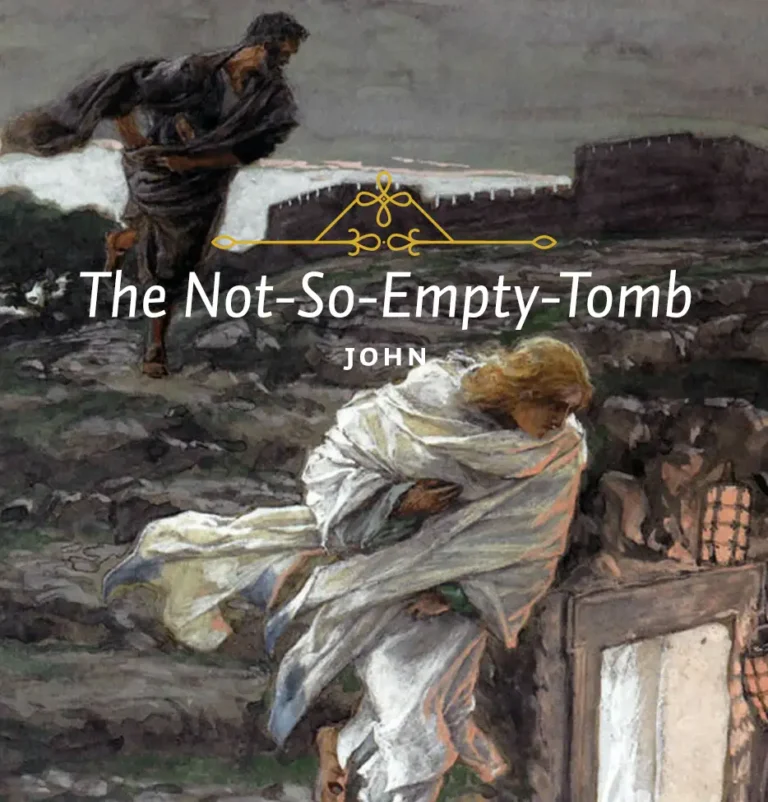
Not So Empty Tomb

Monday: Events of Easter Morning

One of the great historical evidences of the resurrection of Jesus Christ is the fact of the empty tomb. But the remarkable and quite startling fact is that when Peter and John arrived at the tomb on the first Easter morning it was not quite empty. That’s right, the tomb on Easter morning was not quite empty. The body of Jesus was gone, but something was still there. The graveclothes remained behind. And the Bible suggests that there was something about them so striking that John at least saw them and believed in Jesus’ resurrection.

Keep Reading
Not So Empty Tomb

Tuesday: Jewish Burial

Mary meanwhile found the two chief disciples Peter and John, presumably in John’s house where the beloved disciple had taken Mary, Jesus’ mother. The two disciples immediately started for the tomb, running and leaving Mary far behind. John was the younger man. Consequently, he arrived at the tomb first, stooped to look through the narrow aperture, and saw the graveclothes.

Keep Reading
Not So Empty Tomb

Wednesday: The Resurrection

Now what would we have seen had we been there at the moment at which Jesus was raised from the dead? Would we have seen Jesus stir, open His eyes, sit up, and begin to struggle out of the bandages? Is this what we would have seen? Not at all. That would have been a resuscitation, not a resurrection. It would have been the same as if He had recovered from a swoon. Jesus would have been raised in a natural body rather than a spiritual body, and that was not the case at all.

Keep Reading
Not So Empty Tomb

Thursday: What Peter and John Saw

At this point Peter arrived and went into the sepulchre. Undoubtedly Peter saw what John had seen, but in addition he was struck by something else. The cloth that had been around the head was not with the other clothes, it was lying in a place by itself (v. 7).

Keep Reading
Not So Empty Tomb

Friday: Our Own Coming Resurrection

The second lesson from this story is this. The experiences of Peter and John at the tomb also indicate that the body of the Lord was glorified. It was sown a natural body and was raised a spiritual body. And in this body Jesus lives, seated at the right hand of God where He waits in glory, interceding for His own until the moment when He will return again in judgment.

Keep Reading
The Day Faith Died

Monday: “I Will Not Believe”

When Jesus died, the faith of His disciples died. There was much about Jesus that they didn’t understand, but what they did understand, they believed and they followed Him because of this. For the three years they were with Him, He was their life. Where He went, they went. What He said, they heard. What He instructed, they tried to obey. Then all of a sudden, even though He had warned them of it, He was taken away, tried and crucified. And they were utterly despondent. So you see, in a sense we can say that when Jesus died, His disciples died too.

Keep Reading
The Day Faith Died

Tuesday: “We Had Hoped”

Now if Thomas is a great example of the death of faith, the Emmaus disciples, whom I identify as Cleopas and his wife Mary, are great examples of the death of hope. They had been in Jerusalem during the days of the Passover and had hoped that Jesus was the Messiah who would usher in His kingdom. They had heard that certain women whom they knew had gone to the tomb and had returned saying that Jesus had risen from the dead. Yet so far were they from believing in a resurrection, so far were they from having any Christian hope whatsoever, that they didn’t even bother to go to the tomb to investigate themselves. It was done, and so they started out for their home in Emmaus.

Keep Reading
The Day Faith Died

Wednesday: Love Lives

We don’t know a whole lot about Mary Magdalene. We’re told in Luke 8 that Jesus had done a mighty work of grace in her life by casting out seven demons. We know that she was one of the women who ministered to Jesus and the disciples. But that’s about all we know until we come to the activities during this last week of Christ’s life.

Keep Reading
The Day Faith Died

Thursday: Confusion and Distress

Now when the women arrived at the tomb with their spices, it suited their purpose to have the stone removed, but it wasn’t what they were expecting. They were confused and asked each other what they should do. And they decided that Peter and John should be told. Either they appointed Mary to the task, or Mary volunteered. So she’s the one who started off to find the disciples to give them the message.

Keep Reading
The Day Faith Died

Friday: The Greatest of These

What happened in that instance was the resurrection of Mary. She, no less than the others, had experienced the death of faith and the death of hope. But when the living Lord spoke her name and thereby revealed Himself to her, her faith, which had died, came leaping from its grave, and her hope, which had evaporated, gathered again around the person of her Lord.

Keep Reading

Monday: Jesus’ Resurrection Sermon

One of the great accounts of the appearances of the Lord Jesus Christ to His disciples following the resurrection is His appearance to the two Emmaus disciples recorded in Luke 24. It is an interesting story for a number of reasons, and one is that Jesus preached a sermon on that occasion. It is referred to in verse 27: “And beginning with Moses and all the Prophets, he explained to them what was said in all the Scriptures concerning himself.”

Keep Reading

Subscribe to the Think & Act Biblically Devotional

Alliance of Confessional Evangelicals

About the Alliance

The Alliance is a coalition of believers who hold to the historic creeds and confessions of the Reformed faith and proclaim biblical doctrine in order to foster a Reformed awakening in today’s Church.

Canadian Donors

Canadian Committee of The Bible Study Hour
PO Box 24087, RPO Josephine
North Bay, ON, P1B 0C7