In nearly every case where the Lord Jesus Christ appeared to someone after His resurrection, He gave them instructions to take the message to someone else. For instance, when He appeared to Mary Magdelene in the garden, Mary didn’t recognize Jesus at first. But when He spoke her name, she recognized His voice, responded to Him, and then He gave her this word of instruction: “I am going to my Father and your Father, to my God and your God. Now go quickly and tell my disciples.”
Or again we think of His appearance to the women who had been there at the tomb earlier and who are now returning. At the tomb they had seen the angel, and the angel had given them a commission: “He has risen. Come see the place where the Lord lay and now go quickly and tell His disciples that He is risen from the dead.” And then shortly after, the Lord Himself appeared to them and that same commission was repeated.
When we begin to look at the various accounts of the resurrection appearances of Christ, we find this almost invariably the case. There are at least ten, plus another later to the apostle Paul that took place afterward. And in seven or eight of these appearances, there is a commission. And then in five of them there is this explicit commission to take the Gospel of Christ crucified and risen to the world.
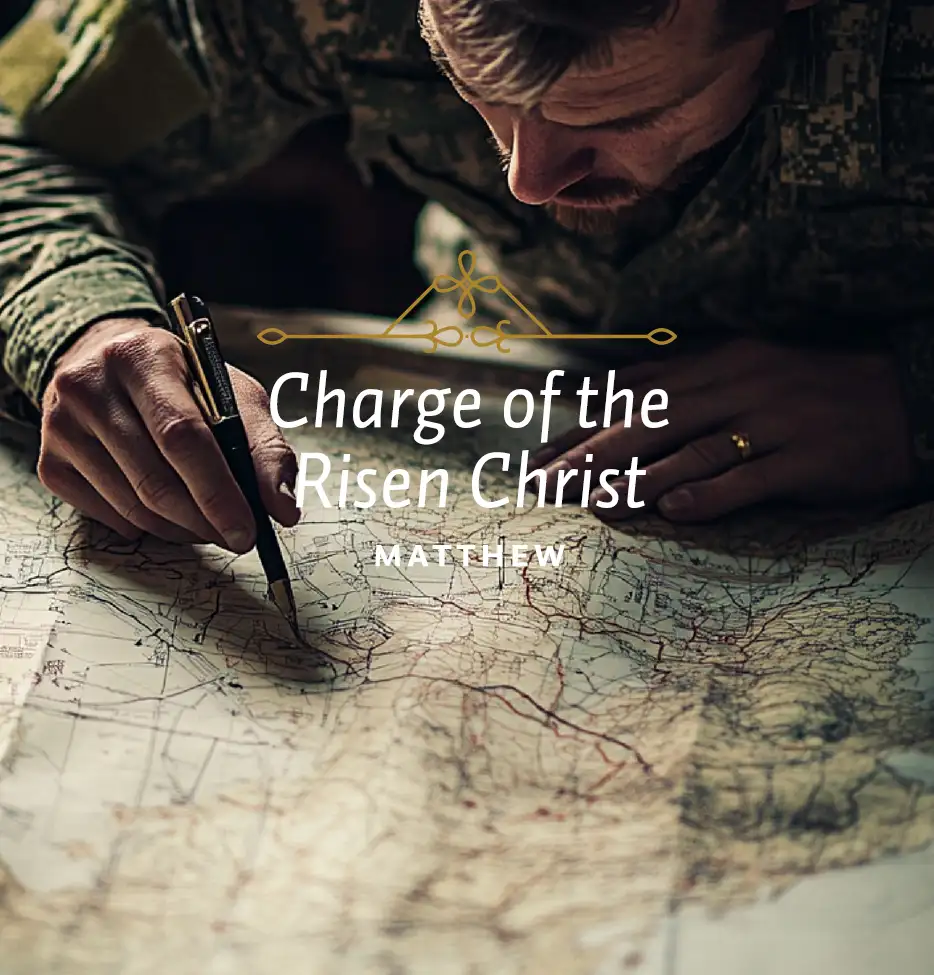
I’ve been impressed that this is the note on which Matthew ends his gospel. Matthew does not end his gospel with an account of the resurrection alone; even more striking, he does not give an account of the ascension. But what he ends with is this commission from Christ in Matthew 28:16-20:
Then the eleven disciples went away into Galilee, into a mountain where Jesus had appointed them. And when they saw him, they worshipped him: but some doubted. And Jesus came and spake unto them, saying, All power is given unto me in heaven and in earth. Go ye therefore, and teach all nations, baptizing them in the name of the Father, and of the Son, and of the Holy Ghost: teaching them to observe all things whatsoever I have commanded you: and, lo, I am with you alway, even unto the end of the world.
Why does Matthew’s gospel end on this note? The answer is surely that if we understand what the resurrection is about, if we understand the meaning of the resurrection, then we have a message and an obligation to take that message to a world that desperately needs it.
Reuben Torrey tells of the first time he ever met Dwight L. Moody, the great evangelist. Moody was in Connecticut at the time holding a series of evangelistic meetings. It was the spring of 1878, and he was there on Easter Sunday. Moody early on that Easter morning went out into the streets of New Haven and began to tell people he met the good news that Jesus is risen. And certainly, that’s what Matthew has in mind as he ends this gospel. He wants us to recognize that this is our obligation and privilege as well.